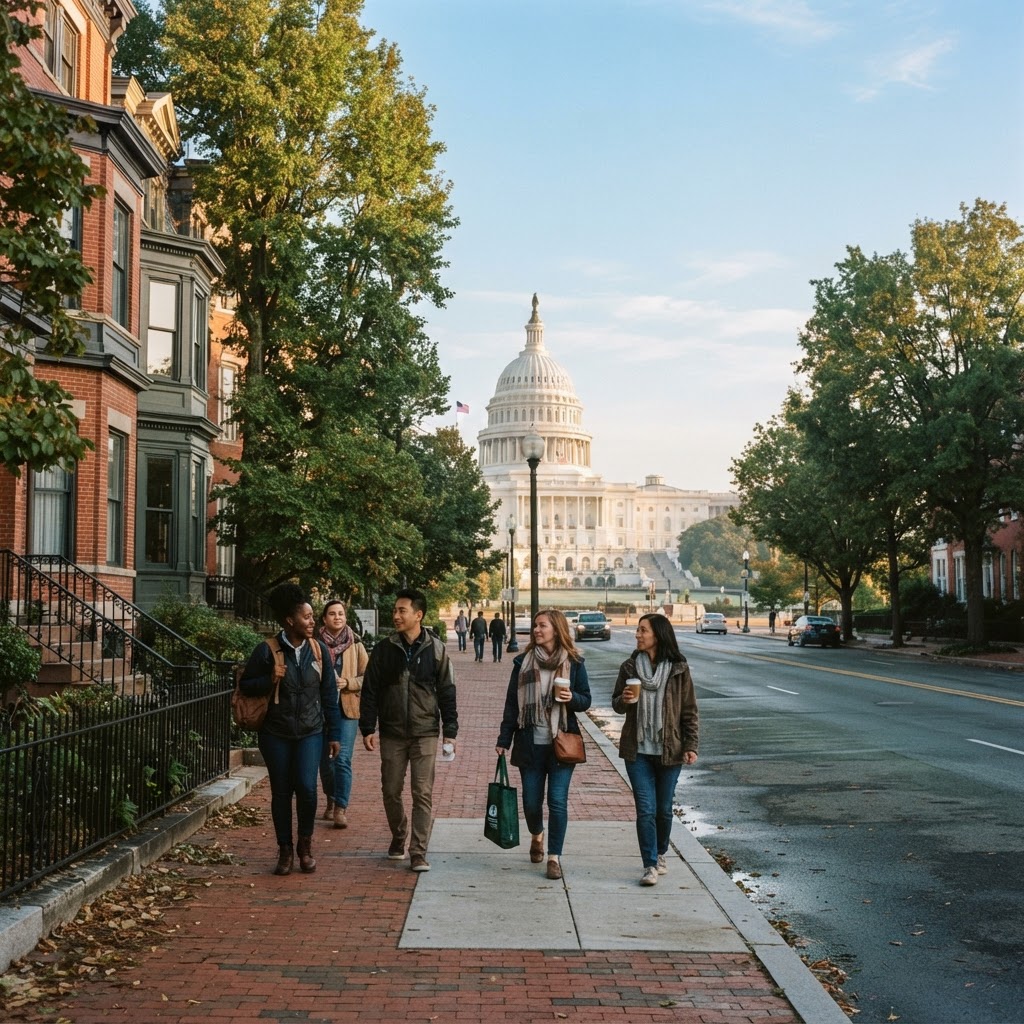
DC for History Buffs: A Local 2-Day Itinerary
DC will let you spend two days collecting presidents and never meet the city that argued with them. The stronger history trip follows federal power on day one, then follows Black Washington, U Street, and Frederick Douglass on day two.
Do not confuse seeing more buildings with learning more history. Reserve one anchor per half-day, read the rooms you enter, and make sure at least half the trip happens beyond the version of America carved into marble.
The Rule: Follow Power, Then Follow the People Who Challenged It
A history trip to DC goes flat when it becomes a marble-building checklist. The better two-day version puts the institutions of federal power on day one, then spends day two with the people and neighborhoods that forced those institutions to change. That means the Capitol and National Archives, yes, but also African American history, U Street, and Anacostia.
Reserve one timed anchor for each morning and leave the rest flexible. Security lines, Court business, demonstrations, and building closures can wreck a schedule packed in 15-minute blocks. History buffs are especially vulnerable to this because every stop looks close on the map and every exhibit deserves another hour.
Day 1 Morning: Capitol Hill Is Three Branches in a Few Blocks
Start with a reserved U.S. Capitol tour. Tours and entry are free, reservations are recommended, and the official route normally includes the Crypt, Rotunda, and National Statuary Hall rather than the House and Senate galleries. The Capitol advises arriving well ahead of the reservation for screening and prohibits food and beverages inside, so do not show up with a full backpack and breakfast for later.
Pair that reservation with the Library of Congress, where the Thomas Jefferson Building requires a separate free timed-entry pass, and the Supreme Court. The Court building is free and open to public visitors on weekdays, subject to Court business; 25-minute Courtroom Lectures are the only routine way to enter the Courtroom outside a Court session, and the schedule can change. On a weekend, accept that the judicial branch is an exterior stop and give the extra time to the Library instead.
Day 1 Afternoon: Read the Documents, Then Test the National Story
Take Pennsylvania Avenue toward the National Archives Museum. Entry is free and tickets are not required, but the Archives now offers free general-admission reservations and optional $1 timed-entry tickets to reduce waits. See the Declaration, Constitution, and Bill of Rights in the Rotunda, then spend time in the wider galleries; the Archives is more useful when you treat the founding documents as the start of an argument, not the end of one.
If you still have museum energy, walk to the National Museum of American History, which is free and does not require a ticket. Pick two exhibitions instead of trying to absorb 1.7 million objects. The point is to compare the country's official promises with the objects showing how people actually lived, worked, protested, migrated, invented, and fought over what those promises meant.
Ford's Theatre: Check the Campus Status Before You Build Around It
Ford's belongs on a serious Lincoln itinerary, but it is not a dependable walk-up right now. As of July 2026, the official visitor page says the historic theatre and museum are temporarily closed for maintenance while the rest of the campus remains open. The visitation schedule varies week to week, every visitor needs a ticket, and not every ticket includes the same buildings.
Check the live calendar for your dates instead of trusting an old itinerary. If the theatre and museum are unavailable, do not force a thin version of the stop just because it is famous. Put that time into the Archives, the Portrait Gallery, or the memorials after dark and return to Ford's on a trip when the full campus is operating.
Day 2 Morning: Give NMAAHC the Time It Actually Requires
Reserve the National Museum of African American History and Culture as day two's anchor. Admission is free, but every visitor needs a timed-entry pass; the museum says the History Galleries alone take about two hours and roughly a mile of walking. Start there, not in the upper culture galleries, and do not schedule another reservation 90 minutes later.
This is where the federal-core itinerary gets corrected. Slavery, Reconstruction, migration, segregation, civil rights, military service, music, sport, art, and political power are not side chapters to the American story. They are the story. If passes are gone, use the American History museum as the morning backup and keep the neighborhood half of the day intact.
Day 2 Afternoon: U Street, the Civil War Memorial, and Chocolate City
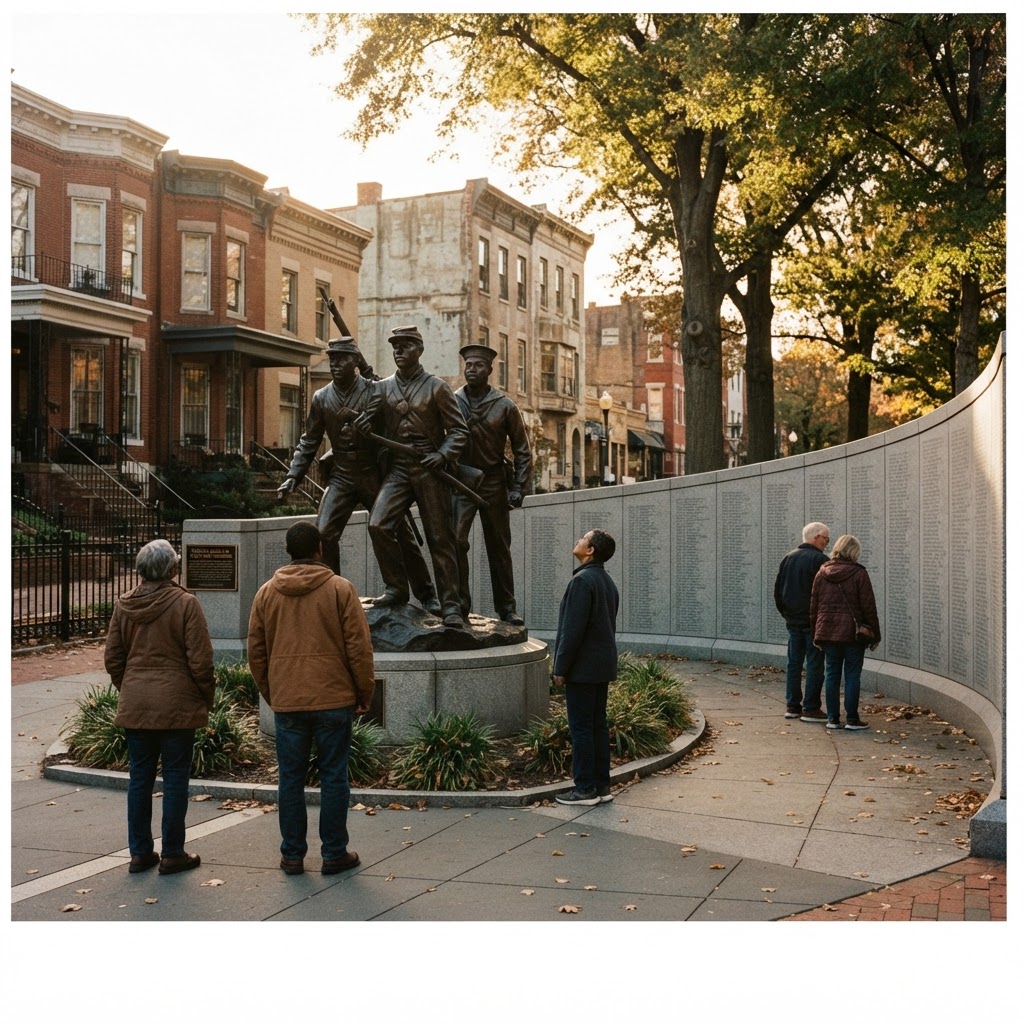
Take Metro north to the African American Civil War Memorial at U Street. The outdoor memorial is self-guided and honors the more than 200,000 African American soldiers and sailors who served in the Civil War. From there, walk the U Street corridor: Howard Theatre, the streets once called Black Broadway, and the blocks where Black-owned businesses, clubs, churches, and civic organizations built power while segregation shaped the city around them.
Keep going with the site's Chocolate City guide, which explains how Washington became a center of Black political and cultural life, or finish with Go-Go music rather than another presidential plaque. A history-buff itinerary should end in the living city, not pretend DC stopped producing history when the monuments were finished.
The Anacostia Swap: Frederick Douglass at Cedar Hill
If Frederick Douglass is your priority, swap U Street for Anacostia. The Frederick Douglass National Historic Site preserves Cedar Hill, where Douglass lived from 1877 until his death in 1895. The visitor center, film, exhibits, and grounds do not require a house ticket, but the historic home is accessible only on a guided tour; NPS strongly encourages advance reservations and currently charges a $1 reservation fee.
This is not a quick add-on after five Mall museums. A typical visit takes about 90 minutes, the house sits above a steep hill, and current operating days and tour times matter. Reserve the house first, then build the afternoon around it. The reward is seeing Douglass as a working writer, statesman, family man, and Washington resident rather than a paragraph between Civil War battles.
Practical Notes: Security, Closures, and Historical Stamina
Capitol Hill buildings use separate security checkpoints and separate reservations. Carry less, eat before entering buildings that restrict food, and check each official page on the morning of your visit. Federal business, demonstrations, maintenance, and special events can change public access without making your history interest any less legitimate.
Use Metro for the jump between the Mall, U Street, and Anacostia; use the Getting Around guide for the details. Wear real walking shoes, take the first available restroom inside each museum, and stop before every artifact becomes visual wallpaper. Two deeply read sites beat six buildings remembered only as security lines.
Let a Historian Connect the Buildings
A focused history, architecture, Capitol, civil-rights, or monument tour can add the context that plaques leave out. Check the exact route and accessibility notes before booking; a title that says “DC highlights” may still be mostly a drive-by loop.

DC Monuments Night Tour with 10+ Stops, National Mall, Tickets
Experience Washington DC lit up at night during this 3-Hour Guided Night Tour of the National Mall and Monuments. Make your way through the city at night via temperature-controlled coach bus, learning about sites you pass along the way. Travelers will have a chance to stop at 10 top sites for photos including the White House, US Capitol, MLK Jr Memorial, WWII Memorial, Vietnam War Memorial, & more. Enjoy the views as your route passes by 20+ additional sites such as Washington Monument, Arlington Cemetery, and many of the Smithsonians. Tour Stops: • National Archives • The U.S. Capitol • White House • Lincoln Memorial • WWII Memorial • MLK Memorial • Korean War Memorial • Lincoln Memorial • Vietnam Memorial • Vietnam Women Memorial • USMC Memorial Cherry blossom season (typically late March-early April) also walk along and see cherry blossom trees up close. Travelers may upgrade to include Tickets to the Washington Monument, Air & Space Museum, or African American Museum.

Washington DC's Monuments & US History Guided E-Cart Tour
This tour offers a detailed introduction to U.S. history and Washington D.C.’s famous monuments, guided by expert Washingtonian storytellers. We love sharing unique, little-known facts that you won’t find on the internet or in books. You can ask your questions and learn more while taking advantage of this group tour with an expert guide. Our tours are designed to be fun for all ages, with patient and friendly guides who make everyone feel welcome. During the 2-hour experience, you’ll enjoy stops at the most popular memorials and the White House, where we’ll showcase our photography skills to help capture unforgettable memories. This is a small group Open-Air Minibus, depending on time and availability it can be classic looking or modern looking electric cart.

DC: US Capitol & Library of Congress / Supreme Court Guided Tour
Explore the heart of American democracy on Capitol Hill with reserved timed-entry tickets and a guide who knows these halls inside and out. We reserve every ticket in advance, so you skip the planning and go straight to the history. Choose your option: US Capitol & Library of Congress (3 hrs, up to 15): Tour the Jefferson Building's Main Reading Room, Gutenberg Bible, and Jefferson's library, then the Capitol Rotunda, crypt, and Statuary Hall. US Capitol & Supreme Court (3 hrs, up to 15): Start at the Supreme Court, then the Capitol Visitor Center, film, and docent-led Capitol tour. BIG 3 Capitol Hill Landmarks (4 hrs, up to 15): All three landmarks on one guided tour, Tuesday–Friday. Upgrade any tour to PRIVATE for just your group (the 45-minute Capitol docent portion is shared). Note: the Library of Congress is closed Mondays and the Supreme Court is closed weekends. Perfect for first-time DC visitors, history buffs, families, and school groups.
Frequently Asked Questions
Keep Exploring
Capitol Hill Neighborhood Guide
Plan the Capitol, Library, Supreme Court, Eastern Market, and the blocks between them.
DC for Political Junkies
Turn the same institutions into a working-government itinerary with galleries, Court access, and White House planning.
African American History Museum Guide
Pass timing, gallery strategy, and how much time the museum really needs.
Chocolate City: Black Washington
Understand the political and cultural history that the federal Mall leaves out.
U Street Corridor
Walk Black Broadway, music history, civil rights, and the neighborhood today.
Anacostia Guide
Build a Frederick Douglass visit into a fuller neighborhood afternoon.