U Street Corridor: DC's Black Broadway, Then and Now
This four-block stretch of Northwest DC was once the most important Black cultural corridor in America, got nearly wiped out in 1968, and spent two decades coming back. Here's the real story, and what's actually worth your time there today.
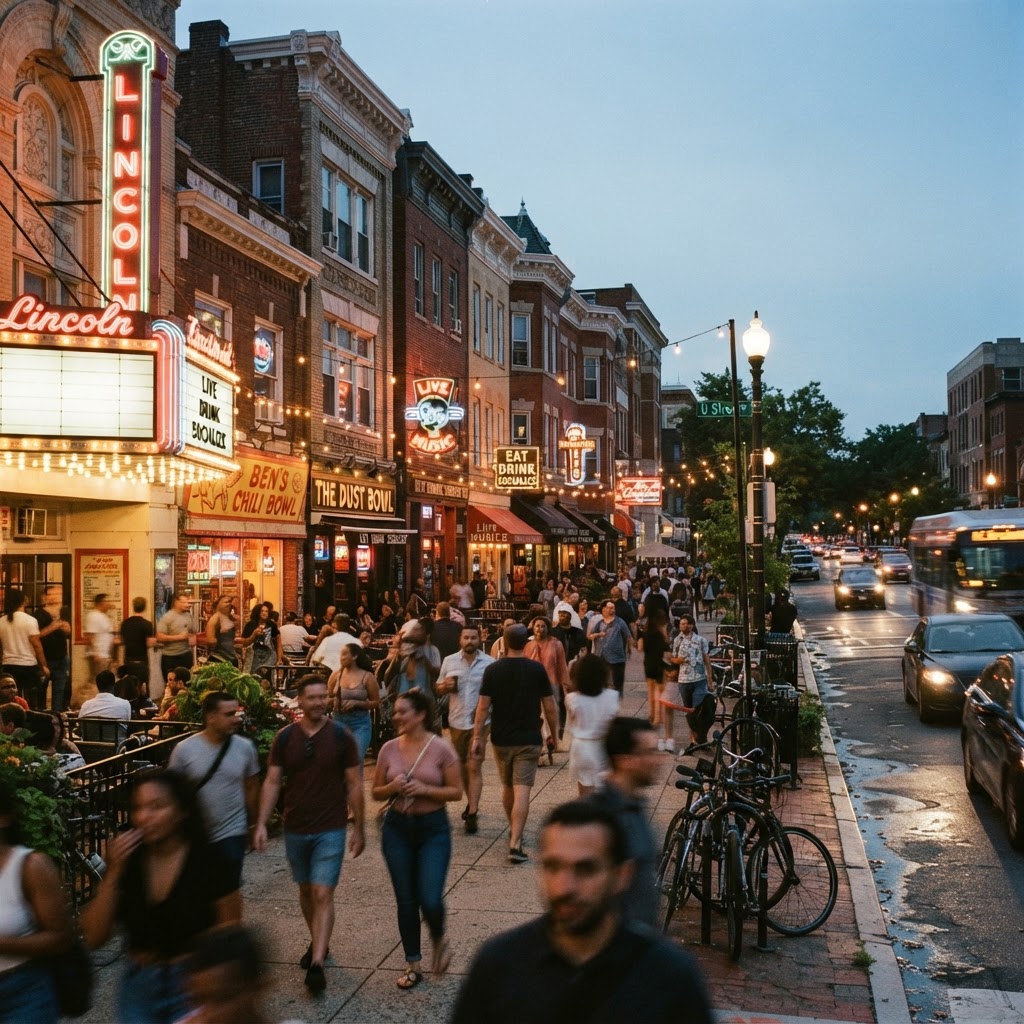
Don't just do Ben's Chili Bowl and leave — that's half the neighborhood. Walk a few blocks either direction and you'll pass the Lincoln Theatre, the African American Civil War Memorial, and the block Duke Ellington grew up near, all within about ten minutes on foot. This neighborhood rewards slowing down.
Why It Was Called Black Broadway
Between roughly 1900 and the early 1960s, U Street was the commercial and cultural center of Black Washington — singer Pearl Bailey is credited with coining the nickname "Black Broadway," and it wasn't hype. This corridor supported more than 200 Black-owned businesses at its peak: banks, theaters, jazz clubs, restaurants, and professional offices, all thriving under segregation because Black Washingtonians built their own downtown when the actual downtown wouldn't have them.
Duke Ellington grew up a few blocks away on 13th Street and got his start playing U Street clubs as a teenager before he ever left DC. The Lincoln Theatre, which still stands today at 1215 U Street right next to Ben's Chili Bowl, opened in 1922 and hosted Ellington, Ella Fitzgerald, Cab Calloway, Nat King Cole, and Pearl Bailey herself when segregation kept Black audiences and performers out of most of the city's other venues. For the deeper story of how this neighborhood fits into DC's broader Black history, see our Chocolate City guide.
1968, and the Slow Comeback
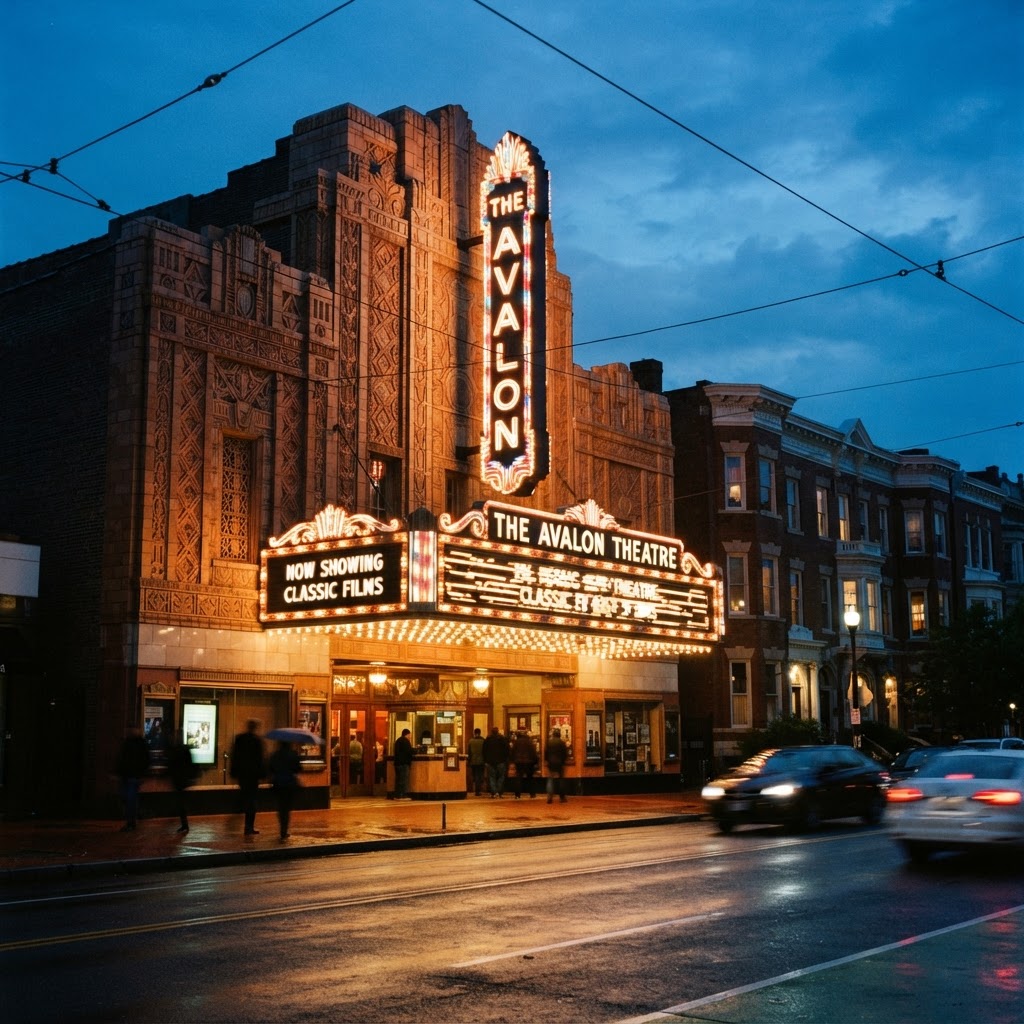
The corridor was devastated by the riots that followed Dr. Martin Luther King Jr.'s assassination in April 1968 — U Street was one of the hardest-hit commercial strips in the country, and much of it sat burned out and disinvested for the better part of two decades. The Lincoln Theatre itself closed and stayed dark for over 25 years.
The real turning point was the 1991 opening of the U Street/African American Civil War Memorial/Cardozo Metro station on the Green and Yellow lines, which finally gave the corridor a practical reason for foot traffic again. The Lincoln Theatre reopened in 1994. Redevelopment picked up through the 1990s and 2000s and hasn't really stopped since — U Street today is one of DC's most visibly gentrified neighborhoods, and that tension (a historically Black cultural capital now surrounded by expensive condos) is a real, current conversation in the city, not just a history-book footnote.
What's Actually Here Now
Ben's Chili Bowl has been serving half-smokes from the same Formica-counter storefront since 1958 — it survived the 1968 riots (it was one of the only businesses allowed to stay open during the curfew that followed) and it's still the single most-cited reason people visit U Street today. See our Half-Smokes & Mumbo Sauce guide for how to order like a local. Right outside the Metro exit, the African American Civil War Memorial honors the more than 200,000 Black soldiers who fought for the Union, with a small companion museum across the street.
The 9:30 Club, a few blocks north on V Street, is one of the most respected midsize live-music venues in the country — touring acts routinely call it one of their favorite rooms to play in the US, and it's worth checking the calendar regardless of who's playing if you care about live music at all. The Lincoln Theatre still runs a regular calendar of comedy, music, and film. Busboys and Poets, the bookstore-restaurant-community-space hybrid, anchors the 14th and V intersection and hosts regular author talks and open mics.
This is also one of the best neighborhoods in the city to feel go-go culture in the open, not just read about it — see our Go-Go Music and Beat Ya Feet guides for the wider context. On weekend nights, 14th and U is one of the densest concentrations of bars and restaurants in DC, spanning soul food, Ethiopian, and increasingly upscale New American spots.
Getting There and Getting Around
Take the Green or Yellow Line to U Street/African-American Civil War Memorial/Cardozo — the station drops you right at the neighborhood's most walkable stretch, and the Civil War Memorial is literally at the exit. From there, most of what matters is packed into about a 10-minute walk along U Street between 9th and 18th, plus the perpendicular stretch of 14th Street. It's flat, walkable, and doesn't require a car — in fact driving here on a weekend night is one of the more frustrating parking searches in the city, so don't bother.
U Street sits within easy walking distance of Shaw to the east and Adams Morgan to the northwest, so it pairs naturally with either as a half-day or full-day outing. See our Neighborhoods overview for how U Street fits into a wider DC trip.
Go Deeper With a Guided U Street Tour
A guided walk is one of the best ways to hear this neighborhood's history from someone who actually knows it, not just read the plaques.

African American History Tour with Museum of African American History Ticket
KB Tours is a one of a kind African American Heritage tour operator in Washington DC that takes visitors to explore the historic African American neighborhoods in all four quadrants of the city, often going off the beaten path. With knowledgeable guides who are passionate about sharing interesting facts and captivating stories of Washington DC's black history, KB Tours prides itself on providing an engaging and entertaining tour experience. Visitors will have the opportunity to stop and visit iconic landmarks and monuments in the city, including the Lincoln Memorial, the Martin Luther King Jr. Memorial, the Capitol, the White House exterior, and tour the Frederick Douglass when opened. KB Tours' guides are committed to keeping visitors of all ages engaged throughout the tour, encouraging young children to participate in the tour activities. The tour includes a ticket the Museum of African American History and Culture. You must take the tour to join us for entrance to museum.
Historical details are drawn from the National Trust for Historic Preservation's Black Broadway guide, the Lincoln Theatre's own historical materials, and DC Historic Sites' documentation of the Lincoln Theatre and the U Street corridor's redevelopment following the 1991 Metro station opening.
Frequently Asked Questions
Keep Exploring
Chocolate City: DC's Black History & Culture Guide
The wider history U Street's story fits into.
Half-Smokes & Mumbo Sauce
How to order at Ben's Chili Bowl like a local.
Go-Go Music: DC's Official Sound
The music that grew up alongside this neighborhood.
Neighborhoods & Where to Stay
How U Street compares to DC's other neighborhoods.
Adams Morgan
The bar-and-restaurant neighborhood just up 18th Street, and DC's other Little Ethiopia.
Best DC Food Tours
Includes a dedicated U Street food and history tour.