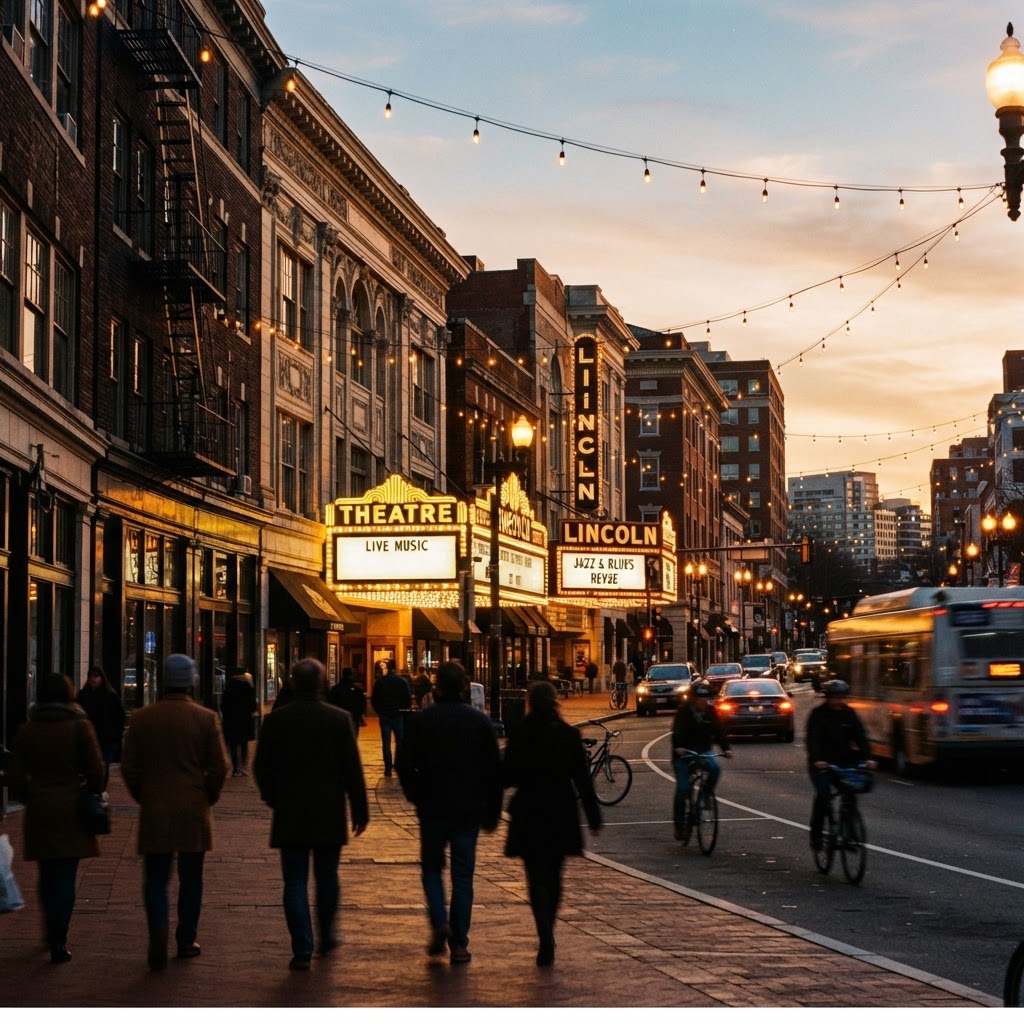
Chocolate City: DC's Black History & Culture Guide
DC has been called Chocolate City since the early 1970s — a nickname that started as a simple population count and grew into something bigger: a Black-majority capital with its own political power, its own Black Broadway, and a cultural gravity that still shapes the city even as the demographics behind the name have shifted.
Most visitors get the monuments and never cross U Street past 14th, let alone the river into Anacostia. That's backwards. The Mall tells you what DC represents to the country. U Street and Anacostia tell you what DC actually is — or was, and is still fighting to stay.
Where "Chocolate City" Actually Comes From
The nickname predates the funk record most people associate it with. DC radio DJs were already calling the city "Chocolate City" in the early 1970s, a shorthand for a hard fact about the place: by then, more than 70% of Washingtonians were Black, and had been a Black-majority city since 1957 — the first major American city to cross that line. Parliament's George Clinton picked the phrase up and turned it into the title track of the band's 1975 album, released just two years after Congress finally granted DC residents limited home rule and a locally elected government for the first time in a century. The timing wasn't a coincidence — a Black-majority city was, for the first time, about to get something closer to a real say in how it was run.
"Chocolate City" was never just about the population count, either. In Black culture the term describes a city with both a Black majority and real Black political power — DC had both by the mid-1970s, and it's part of why the nickname stuck the way it did, in a way that a simple demographic label wouldn't have.
U Street: Black Broadway
Long before Harlem's renaissance made headlines, U Street NW was doing the same thing — Pearl Bailey is the one credited with calling it "Black Broadway," and from roughly 1900 through the early 1960s, it was the self-sustaining commercial and cultural center of Black Washington: Black-owned banks, jazz clubs, theaters, and restaurants stretching a dozen blocks west from Howard University toward 16th Street.
The Howard Theatre, which opened in 1910 at 620 T Street NW, billed itself as the "Theater of the People" and hosted essentially every major Black performer of the era — Duke Ellington (who grew up a few blocks away on 13th Street and took his first piano lessons from a neighbor), Ella Fitzgerald, Billie Holiday, James Brown, Marvin Gaye. A few blocks down, the Lincoln Theatre at 1215 U Street NW opened in 1922 as one of the only theaters in the segregated city where Black Washingtonians could sit anywhere in the house, not just the balcony.
The corridor took real damage after the 1968 riots that followed Dr. Martin Luther King Jr.'s assassination, and it didn't fully recover for decades — Metro construction tore up U Street through most of the 1980s, and the neighborhood didn't get its own station until 1991. Both theaters are open again today: the Howard reopened in 2012 after a $25 million renovation and books a regular concert calendar, and the Lincoln still runs comedy, music, and film events. Bohemian Caverns, the jazz club a block away that hosted Miles Davis and John Coltrane, closed for good in 2016 — the building's still there, but it's not a jazz club anymore, so don't plan a trip around it.
Howard University's Gravity
None of U Street's history makes sense without Howard University sitting at its eastern edge. Chartered in 1867, Howard has spent more than a century and a half as one of the country's most influential HBCUs, producing alumni across law, medicine, politics, and the arts — Thurgood Marshall and Kamala Harris both went there, among a long list of others. It's also the reason U Street became a Black Broadway in the first place: a concentration of students, faculty, and professionals with money to spend and a neighborhood built to serve them, right next door.
Howard's campus isn't a tourist attraction in the museum sense, and you shouldn't treat it like one — it's a working university with students trying to get to class. But walking past the main gates on Georgia Avenue, near Founders Library, gives you a real sense of the institution's scale and the reason the surrounding blocks carry the weight they do.
Anacostia: The Other Chocolate City
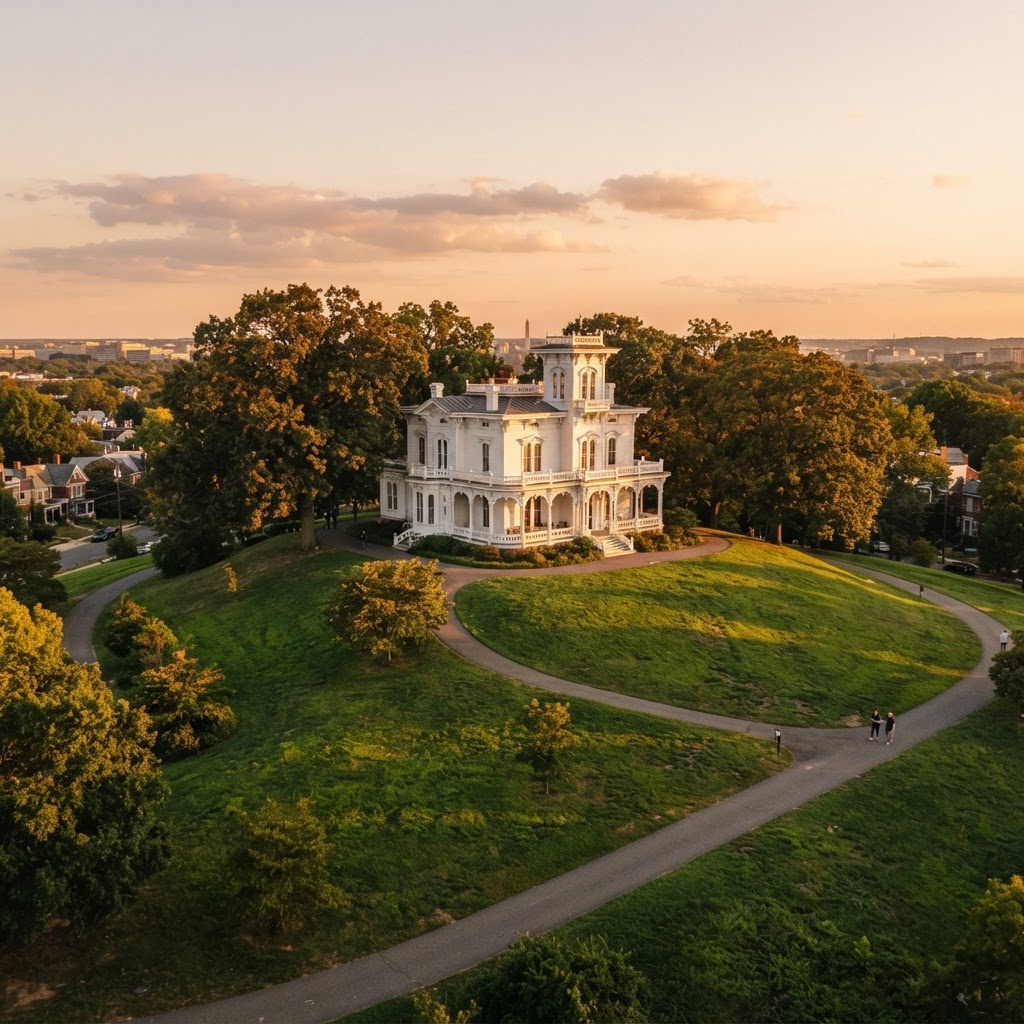
East of the Anacostia River is a different chapter of the same story, and one most visitors never cross the bridge to see. Frederick Douglass bought a house on a hilltop in Anacostia in 1877 — one of the first Black Americans to own property there — and named it Cedar Hill. He lived there until his death in 1895; the Frederick Douglass National Historic Site (1411 W Street SE) preserves it today, and National Park Service rangers run free guided tours of the house that are the only way to see the interior — reserve ahead if you can, since space on each tour is limited. See our Anacostia guide for the fuller neighborhood history, including how it started as a whites-only 1850s subdivision.
A few blocks away, Barry Farm was settled starting in 1867 as federal land for formerly enslaved people to buy and build on, and it grew into a base for Black political organizing that outlasted the neighborhood's original name — Bolling v. Sharpe, the DC companion case decided alongside Brown v. Board of Education in 1954, was built in part on the experience of Barry Farm families fighting school segregation. The Smithsonian's Anacostia Community Museum (1901 Fort Place SE), founded in 1967 as the Smithsonian's first community-based museum, tells that history and keeps building on it with rotating exhibits on Black life east of the river — and it's free, like every Smithsonian.
Is DC Still "Chocolate City"?
Here's the honest, current answer: not by population, no. DC's Black population dropped below 50% in 2011 for the first time since the 1950s, and it's kept falling since — recent estimates put it around 41-43%, with the number of Black and white adult residents now roughly even. Rising housing costs are the main driver: the citywide median home value has climbed several hundred percent since 2000, and it's hit historically Black neighborhoods east of the river and around U Street and Shaw hardest, pushing longtime residents and their families out to Prince George's County and beyond.
That's exactly what the #DontMuteDC movement was really about in 2019 — not a noise complaint over go-go music playing outside a Shaw store, but a citywide flashpoint over who the changing city still belongs to. The nickname "Chocolate City" has outlived the demographic majority that originally earned it, and that gap is worth sitting with rather than glossing over. This isn't a finished, tidy history — it's a live conversation DC residents are still having about their own city.
Where to Actually Go
Start on U Street: walk the corridor past the Howard Theatre and Lincoln Theatre, and read the historical markers along the way — most of the block's Black-owned institutions from the Black Broadway era are gone, but the buildings and the markers are still there. The African American Civil War Memorial and Museum (1925 Vermont Avenue NW, at the U Street/African American Civil War Memorial Metro stop) tells the story of the roughly 209,000 Black soldiers who fought for the Union, and it's a short walk from everything else on this list.
Cross the river for Frederick Douglass's house and the Anacostia Community Museum — genuinely worth the trip, and most visitors skip both. Pair either stop with the National Museum of African American History and Culture downtown, and with go-go music and Beat Ya Feet street dance — DC's two living, present-tense cultural exports that grew directly out of this same history, not just artifacts of it. Close the day with a half-smoke at Ben's Chili Bowl, which stayed open through the 1968 unrest and is still on the same U Street block today.
This page is a starting point, not the full story. Books on DC's Black history and the Chocolate City era go a lot deeper than a single guide page can.
DC Black History Books
Deeper reads on Chocolate City, Black Broadway, and DC's Black history and culture.
Shop on AmazonFrequently Asked Questions
Keep Exploring
National Museum of African American History and Culture
The Smithsonian's flagship telling of this same history downtown.
Go-Go Music: DC's Official Sound
The live, present-tense sound that grew out of Chocolate City's U Street roots.
Beat Ya Feet: DC's Street Dance
Go-go's dance floor counterpart, still evolving today.
Chuck Brown Day & DC's Homegrown Festivals
The city's free annual tribute festival honoring go-go's founder.
Half-Smokes & Mumbo Sauce
Ben's Chili Bowl and the food history of the same U Street block.
DC Local Slang Explained
The words this history and culture actually produced, from bama to DMV.
DC Neighborhoods Guide
Where U Street, Shaw, and Anacostia fit into a broader visit.
Anacostia: The River Crossing Most Visitors Never Make
The neighborhood's full history, beyond this overview.