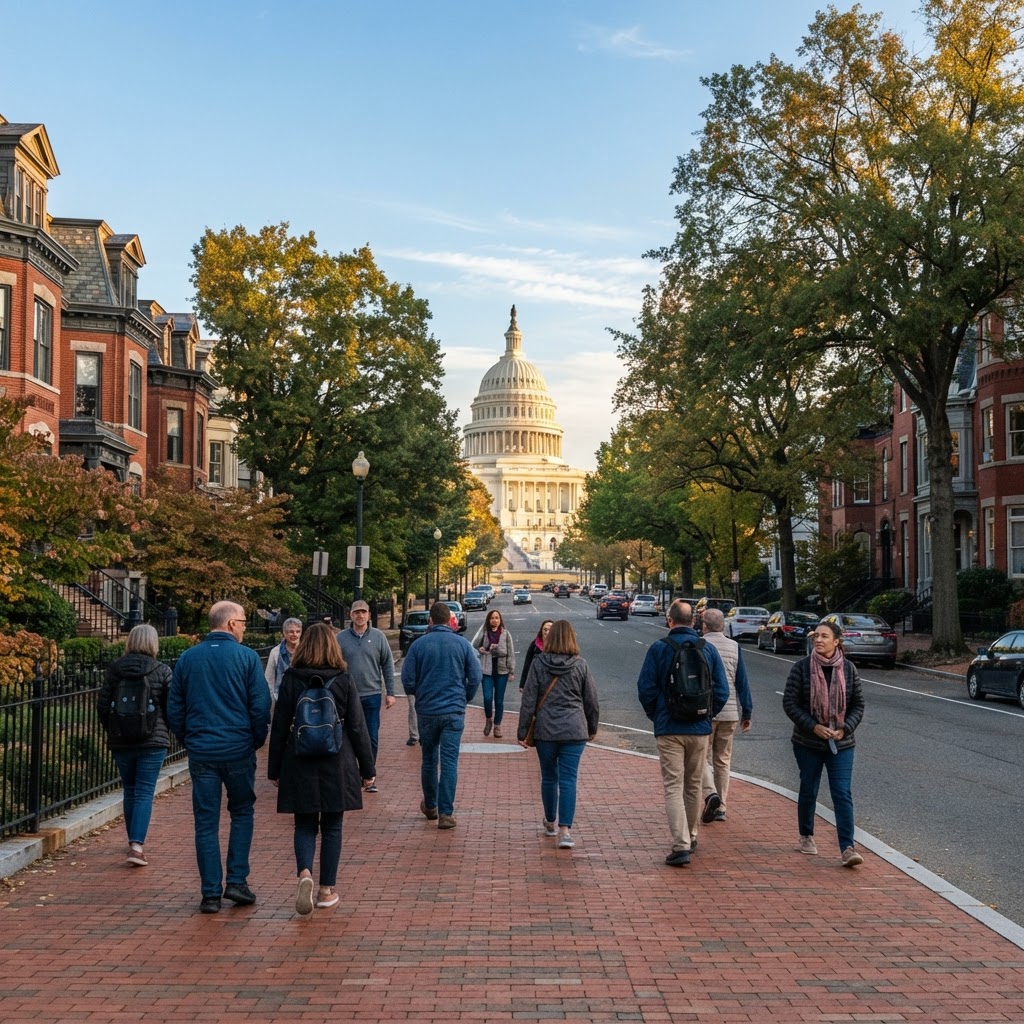
DC for Political Junkies: A Local 2-Day Itinerary
DC rewards people who know the difference between a building tour and watching the institution inside it. This two-day plan gets you as close as public access realistically allows—to Congress, the Court, the White House story, founding documents, protest geography, and the local representation fight most federal itineraries ignore.
Do the homework before you arrive. A Capitol reservation will not put you in the House gallery, a White House request is not a confirmation, and a Court lecture is not an argument. Get those distinctions right and Washington stops feeling like a backdrop and starts acting like the working capital it is.
The Rule: Watch Government Work, Not Just Its Buildings
A political trip to Washington fails when it becomes a photo line outside locked doors. The useful version separates architecture from access: a Capitol tour explains the building, House and Senate galleries let you watch the chambers, a Supreme Court lecture gets you into the Courtroom on many non-session weekdays, and an actual Court session follows different rules. Those are four distinct experiences, not one generic 'government tour.'
Build this as a weekday trip. Congress, the Court, federal offices, and the local DC government keep working calendars, not tourist calendars. Reserve one morning anchor each day, check the official schedules again before leaving the hotel, and accept that a vote, argument, security event, or presidential movement can change access with little notice.
Before You Arrive: Make the Requests That Cannot Be Fixed at the Door
Request a White House public tour through your member of Congress 7 to 90 days before the date you want. Tours are free, but a request is not a guarantee, and the schedule can change even after confirmation. If you are outside the United States, follow the current instructions for international visitors rather than assuming a hotel concierge can arrange access.
Reserve a free U.S. Capitol tour, then separately contact your representative and senators for House and Senate gallery passes. The galleries are not included on the Capitol tour. International visitors with valid international identification can request passes at the House and Senate Appointment Desks in the Capitol Visitor Center. That distinction is the difference between seeing the Rotunda and watching a chamber conduct business.
Day 1 Morning: Capitol Tour, Then the Chambers
Start at the Capitol Visitor Center with the reserved tour. The standard route normally covers the Crypt, Rotunda, and National Statuary Hall; it does not include the House or Senate galleries. Leave extra time for screening, carry as little as possible, and do not schedule a gallery visit against a hard lunch reservation. Floor schedules move, and the galleries use additional screening.
Use your passes after the tour. The House Gallery can admit visitors on weekdays even when the House is out of session, subject to closures; the Senate Gallery follows the Senate's schedule and opens shortly before it convenes. If neither chamber is doing anything visible, spend the time in the Capitol Visitor Center's Exhibition Hall instead of pretending an empty room is the same experience. The exhibit is specifically about Congress and how legislation moves.
Day 1 Afternoon: The Court and the Library Are the Better Doubleheader
Walk across First Street to the Supreme Court. The building and visitor programs are free and first-come. On many non-session weekdays, 25-minute Courtroom Lectures are the routine way to enter the Courtroom; they can be canceled for Court business, so check the rolling calendar. Court sessions are open to the public with limited seating, and the Court is currently using both an online-lottery pilot and a first-come seating option. Read the live instructions before planning an argument-day line.
Then use your separate free timed entry for the Library of Congress Thomas Jefferson Building. Do not treat it as a decorative waiting room between branches. The Main Reading Room overlook, exhibitions, architecture, and collections show how Congress gathers the record it legislates from. If the Court is closed for the weekend, make the Library the anchor and use the Capitol Hill guide to turn the rest of the afternoon into Eastern Market and the residential neighborhood instead.
The White House Reality Check: Confirmed Tour or Useful Backup
If your White House request is confirmed, follow the current arrival and identification instructions exactly and leave the rest of that half-day loose. The public route covers State Floor rooms, not the Oval Office, Situation Room, West Wing, or a spontaneous meeting with anybody you watch on television. A White House tour is access to a working residence and ceremonial space, not backstage access to the presidency.
Without a confirmed tour, go to the free White House Visitor Center at 1450 Pennsylvania Avenue NW. It has security screening, roughly 100 artifacts, archival material, an interactive White House tour, and a short film. Pair it with Lafayette Square and the exterior views, then move on. Standing at the fence for an hour will not make the West Wing more open.
Day 2 Morning: Read the Constitution, Then Look at Who Got to Use It
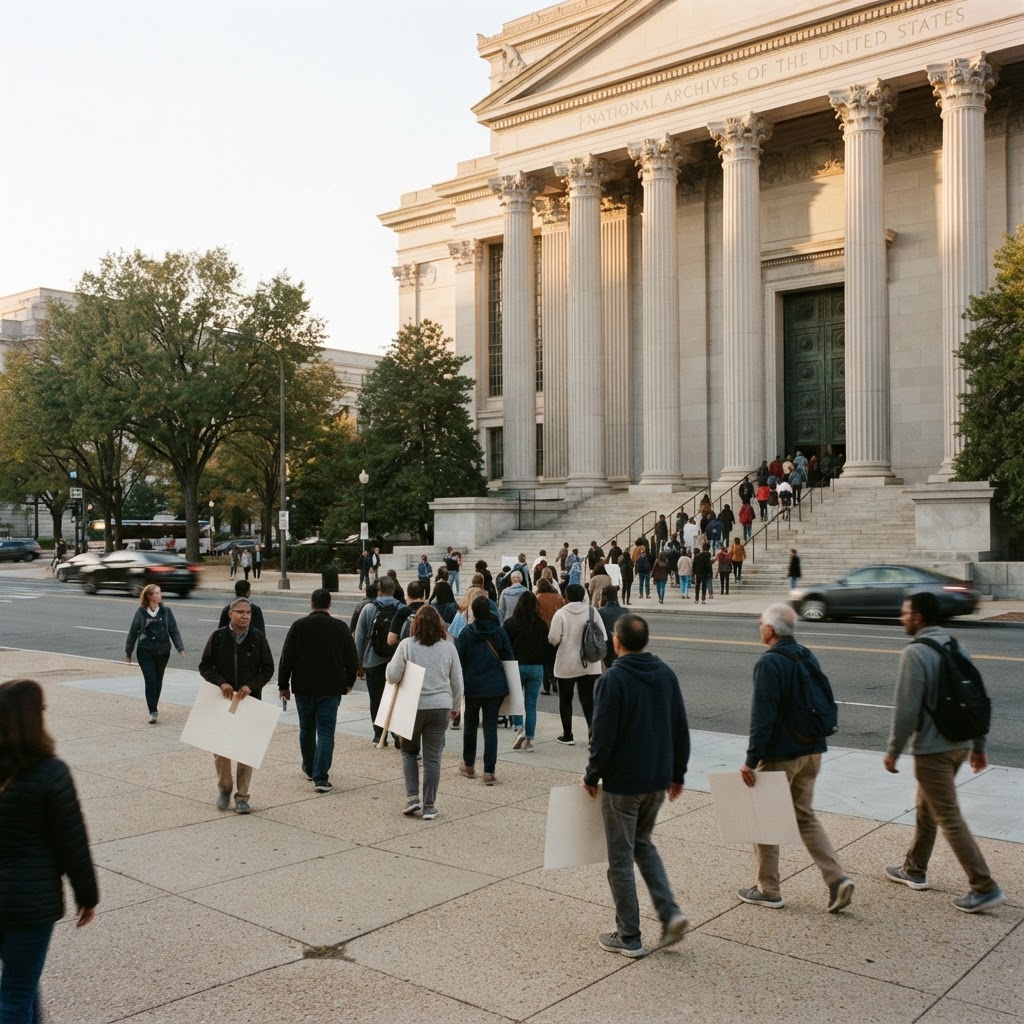
Start at the National Archives with the Declaration of Independence, Constitution, and Bill of Rights in the Rotunda. Admission is free. Give yourself more than the ceremonial glance: the surrounding records and rights exhibits make clear that constitutional language becomes political only when people organize, litigate, vote, petition, and force institutions to answer it.
Walk to the free National Museum of American History and go straight to American Democracy: A Great Leap of Faith. The exhibition covers participation, debate, compromise, citizenship, and political engagement through objects including campaign material, suffrage history, civil-rights organizing, and artifacts tied to the Declaration, Emancipation Proclamation, and Declaration of Sentiments. This is the stop for campaign-process people who want more than portraits of officeholders.
Day 2 Afternoon: Walk the Protest Axis Without Treating Protest as Theater
Walk west along Constitution Avenue toward the White House and Lafayette Square, or continue through the Mall toward the Lincoln Memorial. This is not just a monument route; it is infrastructure for petition, assembly, marches, vigils, and public argument. The National Park Service notes that the Mall has hosted First Amendment activity nearly since its creation and maintains current rules for demonstrations and permitted spaces.
If a demonstration is happening, remember that participants are there for a cause, not to improve your itinerary. Stay out of organizing areas, do not photograph vulnerable people without permission, follow police and event directions, and expect fences or street closures. Check current National Mall conditions that morning. Political tourism should make you more attentive to civic participation, not turn somebody else's rights into a backdrop.
The Local Politics Most Visitors Miss: DC Governs Without Full Representation
Finish by noticing the jurisdiction under your feet. Washington residents elect a mayor and a 13-member Council, but DC has no voting senators and its House delegate cannot vote on final passage. Congress also retains authority over District laws and budgets. That is why 'Taxation Without Representation' is not a souvenir slogan here; it describes the political structure residents live under.
Read the District's official DC governance overview, then walk past the John A. Wilson Building across from Freedom Plaza if your route takes you downtown. Do not assume it operates like a public museum or that you can wander into offices. The point is to leave the federal-theme-park version of Washington behind and understand that the people serving your coffee, running Metro, and raising families here are also constituents in a city whose local decisions remain exposed to congressional intervention.
Practical Notes: Security, Bags, and Schedule Triage
Every institution has its own screening and prohibited-item rules. Carry a compact bag, skip campaign buttons inside formal chambers, and verify identification requirements on the official page rather than copying a packing list from social media. Use Capitol South for the Capitol complex, Federal Triangle or Metro Center for the White House area, and Archives-Navy Memorial for the Archives. The Getting Around guide covers fares, restrooms, construction alerts, bikes, and scooters.
If the schedule collapses, protect the substance: Capitol Exhibition Hall instead of empty galleries, the Library instead of a closed Court, the White House Visitor Center instead of an unconfirmed tour, and American Democracy instead of another exterior photo. A political junkie's trip should end with a clearer understanding of institutions, access, and representation—not a camera roll of columns.
Add a Guide Where the Plaques Stop
A focused Capitol, political-history, architecture, civil-rights, or monuments tour can connect institutions that otherwise look like isolated marble stops. Read the exact route before booking; a general “DC highlights” loop may not include interior access.

DC: US Capitol & Library of Congress / Supreme Court Guided Tour
Explore the heart of American democracy on Capitol Hill with reserved timed-entry tickets and a guide who knows these halls inside and out. We reserve every ticket in advance, so you skip the planning and go straight to the history. Choose your option: US Capitol & Library of Congress (3 hrs, up to 15): Tour the Jefferson Building's Main Reading Room, Gutenberg Bible, and Jefferson's library, then the Capitol Rotunda, crypt, and Statuary Hall. US Capitol & Supreme Court (3 hrs, up to 15): Start at the Supreme Court, then the Capitol Visitor Center, film, and docent-led Capitol tour. BIG 3 Capitol Hill Landmarks (4 hrs, up to 15): All three landmarks on one guided tour, Tuesday–Friday. Upgrade any tour to PRIVATE for just your group (the 45-minute Capitol docent portion is shared). Note: the Library of Congress is closed Mondays and the Supreme Court is closed weekends. Perfect for first-time DC visitors, history buffs, families, and school groups.

Washington DC's Monuments & US History Guided E-Cart Tour
This tour offers a detailed introduction to U.S. history and Washington D.C.’s famous monuments, guided by expert Washingtonian storytellers. We love sharing unique, little-known facts that you won’t find on the internet or in books. You can ask your questions and learn more while taking advantage of this group tour with an expert guide. Our tours are designed to be fun for all ages, with patient and friendly guides who make everyone feel welcome. During the 2-hour experience, you’ll enjoy stops at the most popular memorials and the White House, where we’ll showcase our photography skills to help capture unforgettable memories. This is a small group Open-Air Minibus, depending on time and availability it can be classic looking or modern looking electric cart.

US Capitol "Big 3" Highlights with Reserved Entry
Join an expert local guide on this small-group guided tour of Capitol Hill, one of the top things to do in DC! Explore the largest library on the world and see Thomas Jefferson's original book collection at the Library of Congress, or marvel at the majesty of the US Supreme Court, with either option including reserved access to the US Capitol Tour. Upgrade to the VIP option for a smaller group tour that includes the Supreme Court, Library of Congress, US Capitol, and Folger Shakespeare Library and Theatre! With 3 fantastic options, you get to choose the combo that's best for you! Choose between: US Capitol + Library of Congress to see the world’s largest library US Capitol + Supreme Court to explore the highest court in the land Or VIP Capitol Hill Attractions for an even more exclusive experience to see the Capitol, Library of Congress, Supreme Court, and an exclusive visit to the US House Chambers with a smaller group of 10 max
Access and itinerary details were verified against the U.S. Capitol Visitor Center, Supreme Court, White House, National Park Service, National Archives, National Museum of American History, Library of Congress, and District of Columbia government visitor and governance pages. Institutional schedules and security rules change; recheck the linked official page for your exact date.
Frequently Asked Questions
Keep Exploring
Capitol Hill Guide
The Capitol complex, Library, Supreme Court, Eastern Market, and the neighborhood beyond the marble.
DC for History Buffs
A broader two-day route connecting federal institutions with Black Washington and Frederick Douglass.
National Portrait Gallery
Presidents, power, protest, and the people represented beyond elected office.
DC250: America's Anniversary
Current 2026 commemorations, exhibitions, and planning advice for the semiquincentennial year.
Getting Around DC
Metro, buses, restrooms, construction alerts, bikes, scooters, and airport transfers.