Go-Go Music: DC's Official Sound
Every city claims a sound, but DC actually put it into law. Go-go is a live, percussion-driven funk genre born here in the 1970s, and it's the one cultural export most visitors never hear about — because it never really left home.
If you ask a tourist what DC sounds like, they'll say nothing, or maybe a Marine Corps band. Ask anyone who grew up here and it's go-go, full stop — cookouts, go-go on someone's car speakers on U Street, Bustin' Loose blasting after every Nats home run. It's not a museum genre. It's still a Friday night.
What Actually Makes Go-Go Go-Go
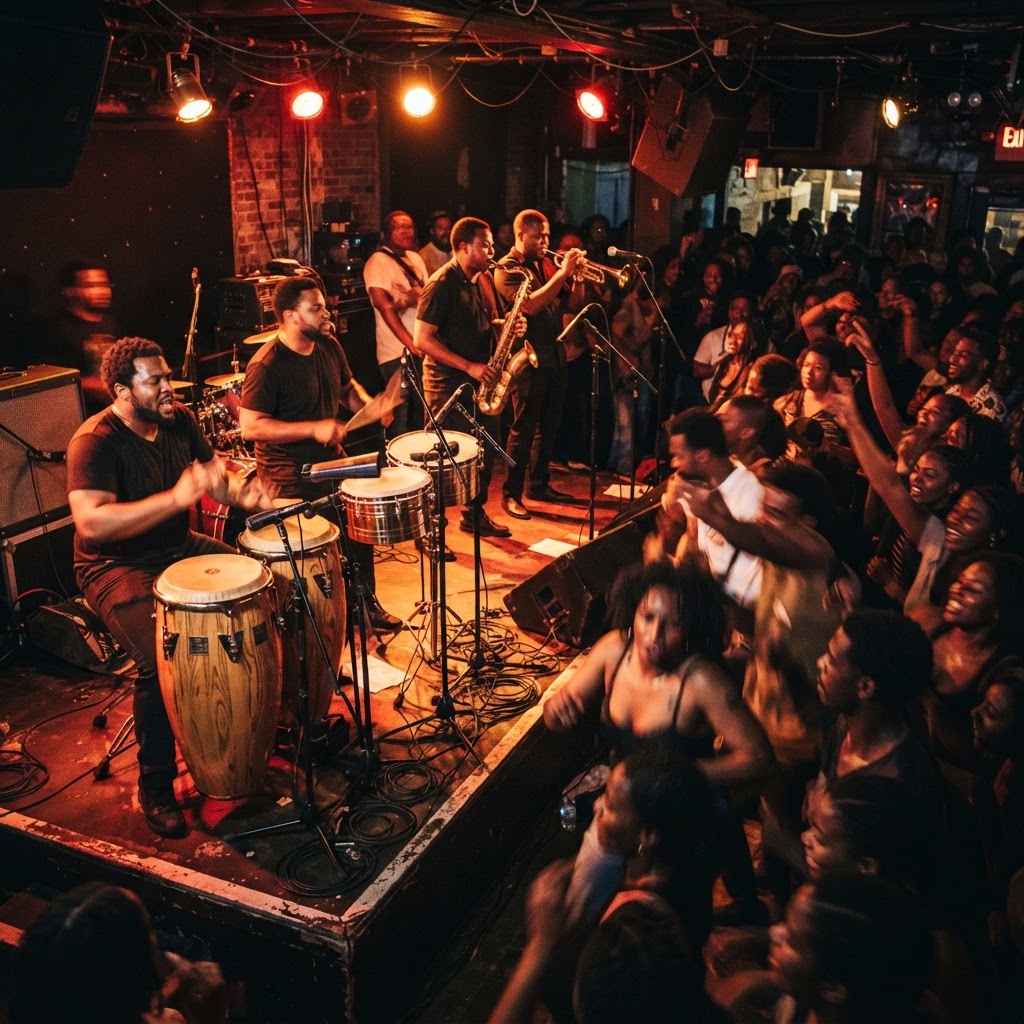
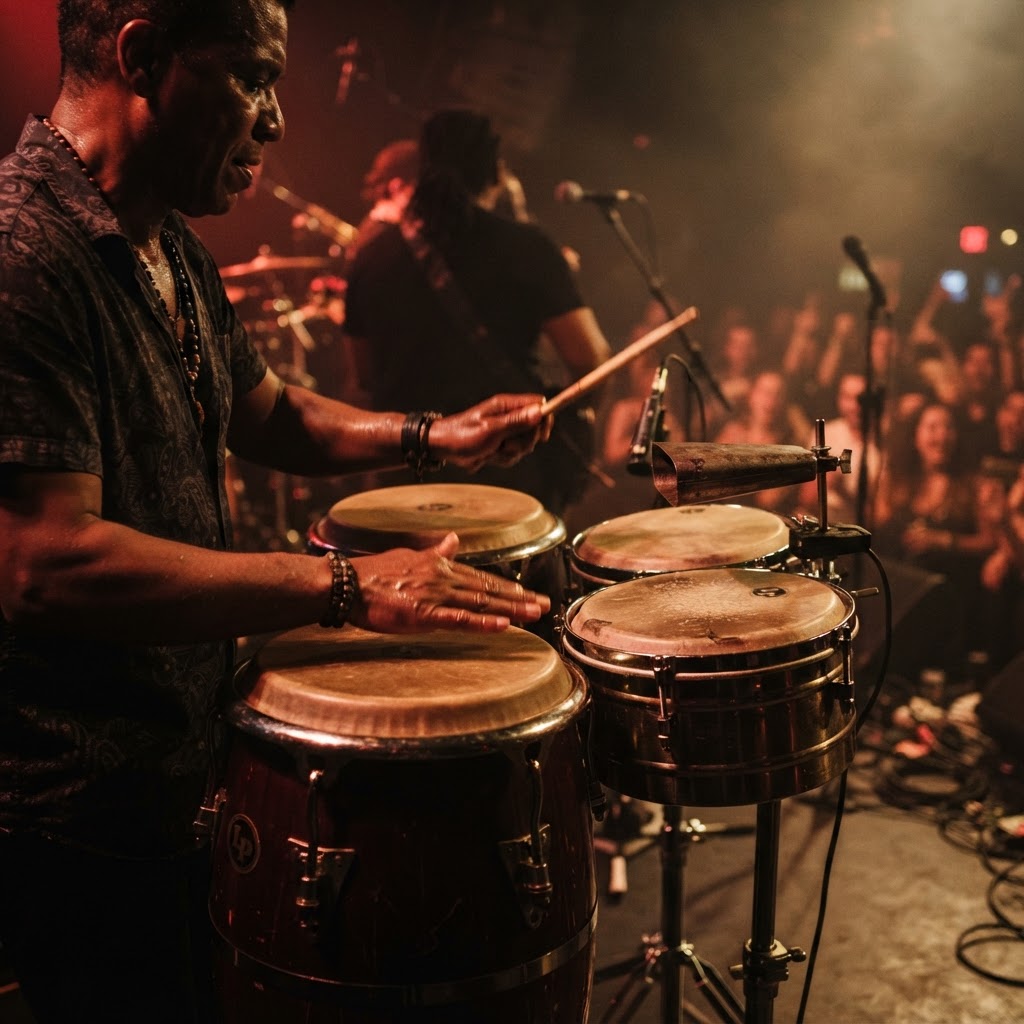
If you've only got one takeaway, make it this: go-go is built around "the pocket" — a live band never fully stops between songs. Where most concerts have a beat, then silence, then the next song, a go-go band keeps a low-key percussion groove (congas, timbale, cowbell, hand claps) running underneath the whole set, so one song bleeds into the next without a break in the dancing. That non-stop, syncopated, conversational rhythm is the actual technical definition of the genre, not just "funk from DC."
Layered on top of the pocket is heavy call-and-response — the bandleader or lead talker shouting out neighborhoods, schools, and crews in the crowd and getting a roar back — plus horns, a full drum kit, and usually a rapper or two trading off with the singers. It's percussion-forward, almost Afro-Latin in its rhythm section, with gospel-style vocal runs on top. That combination is why it never really translated to radio the way go-go's contemporaries did: it's a live-show genre first, a recorded genre a distant second.
Chuck Brown and the Sound He Built
Chuck Brown, the "Godfather of Go-Go," assembled that formula with his band the Soul Searchers in the mid-1970s, blending his own gospel roots with Latin percussion patterns he'd picked up playing around the DMV. The breakthrough was "Bustin' Loose," released in 1979 — it spent four weeks at No. 1 on Billboard's R&B chart (it topped out lower, at No. 34, on the pop Hot 100, which tells you a lot about how DC-specific this sound stayed even at its commercial peak). It's still the unofficial DC anthem: it plays after every Nationals home run and gets pumped through Capital One Arena when the Capitals win.
Brown wasn't the only architect — bands like Trouble Funk, Experience Unlimited (EU, of "Da Butt" fame from the Spike Lee film School Daze), and Rare Essence built out the sound alongside him through the 1980s, and Rare Essence in particular is still active today, five decades in. But Chuck Brown is the reason the pocket exists in the first place, and the reason go-go is inseparable from DC specifically rather than just being a regional funk variant.
#DontMuteDC and Becoming the City's Official Music
Go-go's status as DC's official music didn't come from a marketing campaign — it came from a fight. In April 2019, a longtime MetroPCS store in Shaw (at 7th and Florida, a block that had played go-go over its outdoor speakers for years) was told by a new resident's noise complaint, and then by corporate T-Mobile, to shut the music off. A Howard University student, Julien Broomfield, coined #DontMuteDC on Twitter, and it exploded — a petition drew more than 80,000 signatures, a protest concert shut down U Street, and within days T-Mobile reversed course.
The moment landed as more than a noise dispute — it became the flashpoint for a citywide conversation about gentrification and who DC's rapidly changing neighborhoods still belong to. That energy carried into the DC Council, which in 2020 passed legislation formally designating go-go as the official music of Washington, DC, with a mandate to preserve and archive its history. It's one of the only American cities with an officially designated local genre, and it happened because residents refused to let a soundtrack that had been playing on that same corner for decades get quietly switched off.
Where to Actually Hear It Live Today
Go-go is still a living, weekly scene, not a museum piece — Backyard Band, Rare Essence, TCB, and DCVybe all still play regularly around the DMV, and it's worth catching one if the timing lines up with your trip. Shows move around between clubs, go-go-friendly bars, community festivals, and the occasional bigger stage (there have been go-go nights at spots ranging from small U Street and Anacostia venues up to The Anthem at the Wharf), so there's no single fixed venue the way there is for jazz at a permanent club. Check Eventbrite or dcgogo.org before your trip for whatever's actually booked that week — schedules shift often enough that anything more specific printed here would likely be stale by the time you read it.
If you're not going to catch a live set, U Street itself is still the best place to feel the history even without a show that night — walk the corridor past the mural at the old MetroPCS storefront where #DontMuteDC started, and grab a half-smoke at Ben's Chili Bowl, which stayed open through the 1968 riots and has outlasted just about everything else on that block.
Chuck Brown Day
DC throws an annual, free celebration called Chuck Brown Day, run by the DC Department of Parks and Recreation, with go-go bands playing live all afternoon in honor of Brown's legacy. It's normally centered around Chuck Brown Memorial Park in the Langdon Park area of Northeast DC, though the exact site has moved in some recent years (it shifted to Fort Dupont Park for at least one recent edition), so confirm the current year's location and date on the DC Parks and Rec site rather than assuming it's always in the same spot. It's genuinely one of the best free, all-ages ways to experience the sound in person if your trip lines up with it.
Go Deeper With a Guided Black History & Culture Tour
Reading about Go-Go and Chocolate City history is one thing — walking U Street and Anacostia with a guide who can point out exactly where it happened is another. Here are a few options.

African American History Tour with Museum of African American History Ticket
KB Tours is a one of a kind African American Heritage tour operator in Washington DC that takes visitors to explore the historic African American neighborhoods in all four quadrants of the city, often going off the beaten path. With knowledgeable guides who are passionate about sharing interesting facts and captivating stories of Washington DC's black history, KB Tours prides itself on providing an engaging and entertaining tour experience. Visitors will have the opportunity to stop and visit iconic landmarks and monuments in the city, including the Lincoln Memorial, the Martin Luther King Jr. Memorial, the Capitol, the White House exterior, and tour the Frederick Douglass when opened. KB Tours' guides are committed to keeping visitors of all ages engaged throughout the tour, encouraging young children to participate in the tour activities. The tour includes a ticket the Museum of African American History and Culture. You must take the tour to join us for entrance to museum.
Most go-go doesn't get proper streaming distribution — a lot of the best material still lives on CDs and vinyl sold directly by bands and DC record shops. If a live show doesn't line up with your trip, Chuck Brown and Soul Searchers compilations are a real way to bring the sound home.
Chuck Brown & Go-Go Albums
Bustin' Loose and other Chuck Brown & Soul Searchers essentials, plus go-go compilations from other DC bands.
Shop on AmazonFrequently Asked Questions
Keep Exploring
Chocolate City: DC's Black History & Culture Guide
The fuller history of U Street, Black Broadway, and Anacostia that go-go grew out of.
Chuck Brown Day & DC's Homegrown Festivals
The city's free annual go-go tribute festival, plus Funk Parade and H Street Festival.
DC Local Slang Explained
The vocabulary — including DMV itself — that grew up alongside this music.
DC Neighborhoods Guide
Where U Street and the rest of go-go's home turf fit into your trip.
Best Restaurants in DC
Ben's Chili Bowl and the rest of U Street's food history.
Free Things to Do in DC
More no-cost ways to spend a day in the city.