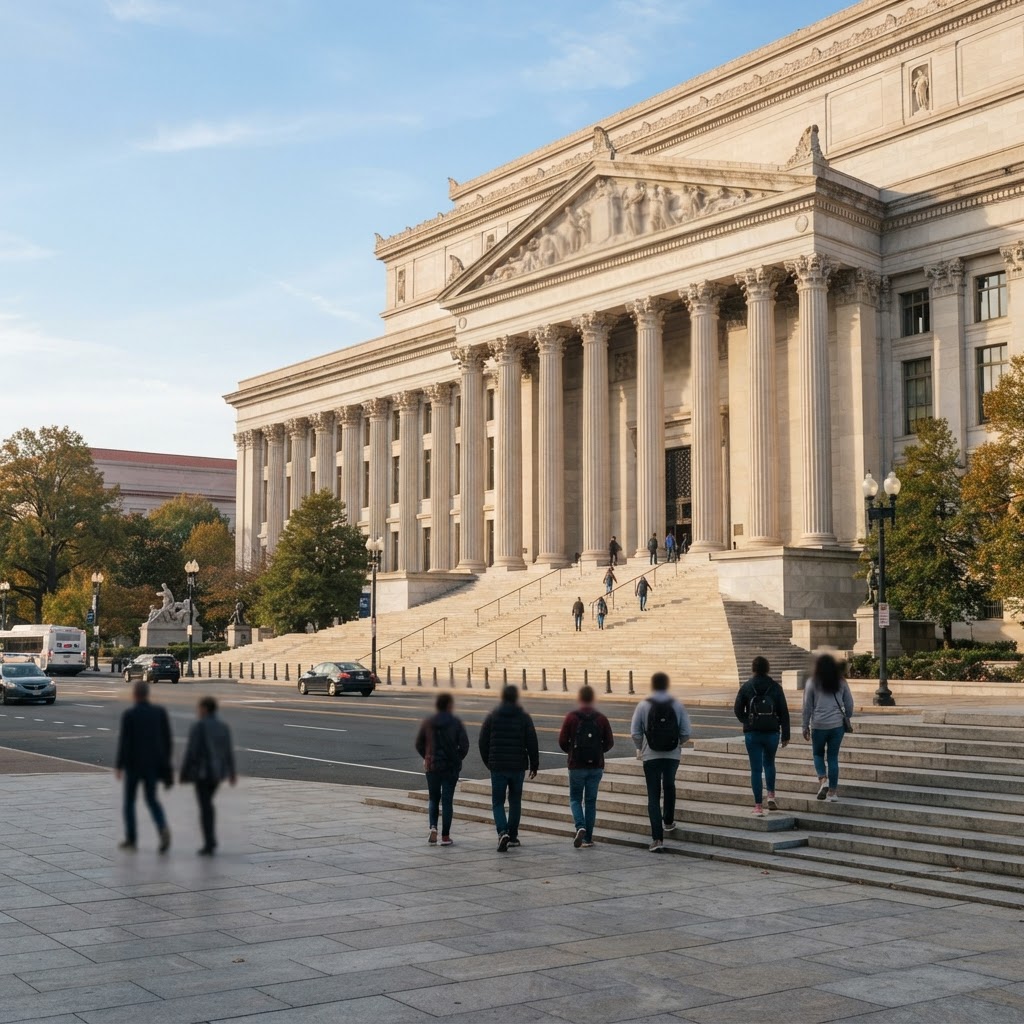
National Archives Museum: A Local's Guide
Most visitors treat the National Archives as a line, three founding documents, and an exit. That misses the better visit. Use the optional timed entry when crowds are heavy, go straight to the Rotunda, then give The American Story, the Magna Carta, and Records of Rights enough time to turn the stop into more than a patriotic photo op.
Budget 75 to 90 minutes plus screening, enter from Constitution Avenue, and do not drive. The Declaration, Constitution, and Bill of Rights are the headline; the wider galleries are where the museum starts asking who those promises reached, when, and because of whose pressure.
Free Admission Does Not Mean Every Line Is the Same
The National Archives Museum is free, and you do not need a ticket simply to enter. The museum does encourage reservations: free general-admission passes help staff plan arrivals, while optional $1 timed-entry tickets are the practical choice when you would rather buy back some certainty during a crowded travel day. Reserve only through the museum's official visit page.
The exhibits are currently open daily from 10 a.m. to 5:30 p.m., except Thanksgiving Day and Christmas Day, with last admission 30 minutes before closing. Those hours can change for federal closures or special events, so check the official page again the morning you go. A reservation is useful; it is not permission to arrive without time for security.
Enter on Constitution Avenue, Even Though Metro Drops You on the Other Side
The address is 701 Constitution Avenue NW. Archives–Navy Memorial–Penn Quarter station on the Green and Yellow lines is directly across Pennsylvania Avenue from the building, but the public museum entrance is on the Constitution Avenue side. Walk around the building instead of joining the first line you see near the Metro exit.
There is no visitor parking at the Archives. Limited metered spaces nearby are a bad foundation for a museum plan, especially with a two-hour limit. Take Metro, walk from Penn Quarter, or use our Getting Around DC guide. Carry a compact bag, expect screening, and use the restroom once you are inside rather than gambling on finding a public one along Constitution Avenue.
Go to the Rotunda First — Then Stay Long Enough to See More Than Three Documents
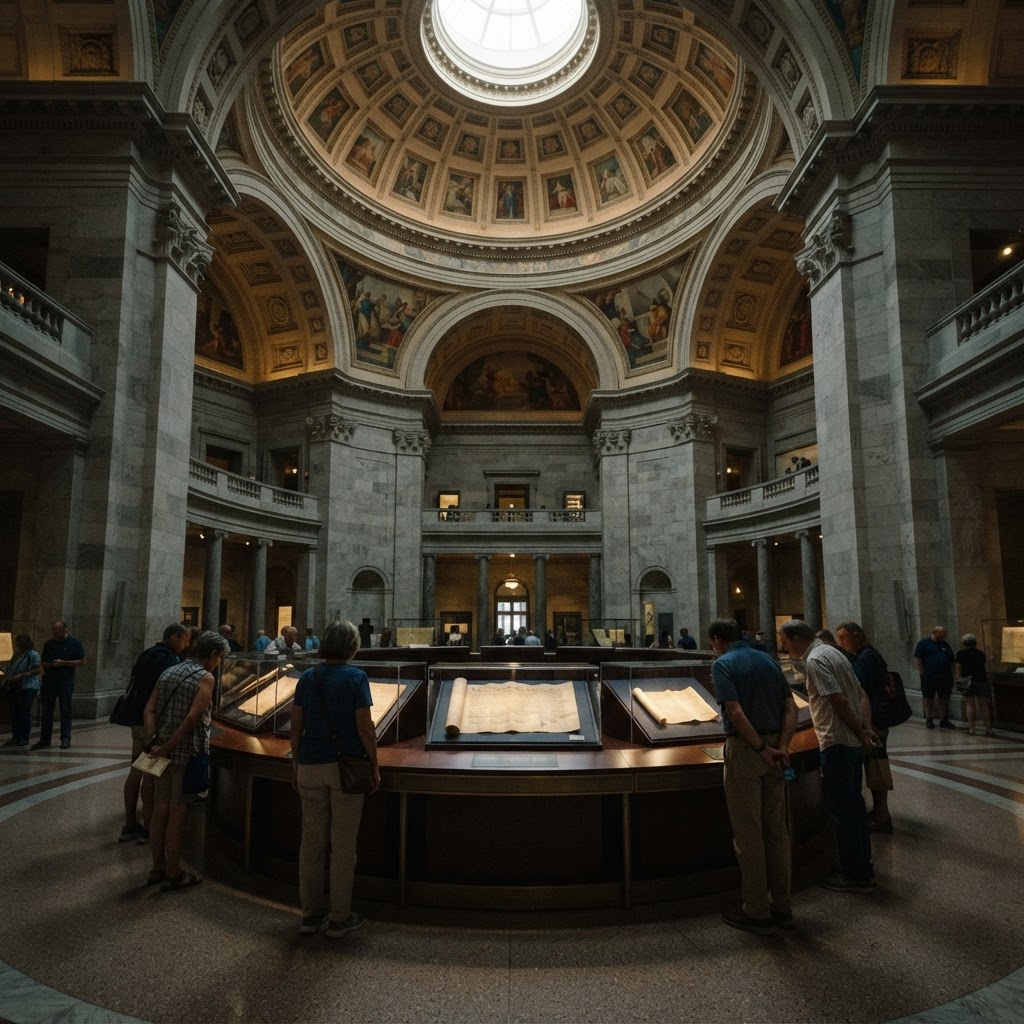
The Declaration of Independence, Constitution, and Bill of Rights are the Charters of Freedom and the obvious first stop. They are also old, faded documents under protective lighting. You will not stand ten feet away and read every line like a fresh printout. Slow down, look at the physical evidence, then use the labels and digital context to understand what you are seeing.
The Rotunda also currently displays the Emancipation Proclamation and the 19th Amendment. That pairing matters: it pushes the room beyond a tidy founding-era story and toward the long argument over who actually received the rights promised on parchment. If the Rotunda is crowded, do not let the line consume the entire visit. The rest of the museum is not an overflow hallway.
The American Story Is the Reason to Budget a Full Hour
After the Rotunda, move into The American Story, the museum's major permanent exhibition built from records across the National Archives. It uses documents and objects to follow turning points in American life instead of pretending national history ended after the Constitution was signed.
Then check the East and West Rotunda Galleries for featured documents and the Lawrence F. O'Brien Gallery for the current special exhibition. Those displays rotate, which is exactly why an old travel blog is a poor substitute for the official what's-on calendar. Read what is actually on view before deciding that you have already seen the Archives.
Thirty, Sixty, or Ninety Minutes: Pick a Real Route
With 30 minutes, make it the Rotunda and the original 1297 Magna Carta near the entrance to Records of Rights. With 60 minutes, add the featured-document galleries and The American Story. With 90 minutes, include the Discovery Center, current special exhibition, Magna Carta, and Records of Rights. Those are the museum's own suggested frameworks, and they are more honest than claiming you can absorb every gallery between lunch reservations.
My recommendation is 75 to 90 minutes for a first visit, plus any wait and screening time. If your day already includes the Capitol or a full Smithsonian museum, do not stack the Archives as a ten-minute photo stop. Use our DC for History Buffs itinerary or DC for Political Junkies itinerary to build the institutions into an actual sequence.
Photography Is Allowed, but Leave the Flash and Selfie Stick Put Away
The current policy encourages non-flash photography, filming, and video for personal use in public areas unless a sign says otherwise. Flash, supplemental lighting, selfie sticks, monopods, and similar equipment are not permitted. In the Rotunda, that means your phone is fine; turning the document case into a personal studio is not.
The museum states that the building is accessible and ADA compliant. Visitors who need a specific entrance, mobility accommodation, or sensory planning detail should use the official accessibility page before arrival. Security procedures and temporary gallery conditions can change faster than a static guide.
Pair It With Penn Quarter, Not a Forced March Across the Mall
The clean pairing is Penn Quarter: the National Gallery of Art, Sculpture Garden, National Portrait Gallery, and restaurants around 7th Street are nearby. The Smithsonian museums west along the Mall look close on a map, but adding one more large museum is how an afternoon turns into artifact fatigue.
For a history-heavy day, continue east toward the Capitol and Library of Congress. For a less intense second stop, use the National Portrait Gallery guide and its later closing time. In 2026, the DC250 guide explains why the founding documents are carrying extra attention during the semiquincentennial year.
Connect the Archives to the Capitol and the City
A focused Archives, Constitution, or Capitol history tour can connect the documents to the institutions and streets around them. Check the exact route before booking; a general highlights tour may only pass the building.
Admission, hours, entrance, transportation, suggested itineraries, accessibility, and photography details were verified against the National Archives Museum's official visitor pages on August 6, 2026. Recheck the official site for federal closures, exhibit changes, and security updates before your visit.
Frequently Asked Questions
Keep Exploring
DC for History Buffs
Build the Archives into a two-day route that includes federal institutions and neighborhood history.
DC for Political Junkies
Connect the founding documents to Congress, the Court, public access, and DC representation.
DC250: America's Anniversary
What the 250th anniversary changes around the Archives and the National Mall in 2026.
National Portrait Gallery Guide
A nearby museum with free admission and later hours for the second half of the day.
Getting Around DC
Metro, walking, restrooms, construction alerts, bikes, scooters, and practical transport advice.