Shaw, DC: The Neighborhood Black Washington Built From Scratch
Just south of U Street, Shaw has its own distinct history — a self-built Black business and cultural district anchored by the True Reformer Building and the Howard Theatre, flattened by the 1968 riots, and slowly rebuilt around Metro access and, more recently, Blagden Alley's food scene. Here's what actually happened, and what's worth your time there now.
People conflate Shaw and U Street constantly, and honestly, on foot you'll barely notice the line between them. But Shaw has its own landmarks worth seeking out on purpose — the True Reformer Building and the Howard Theatre both predate anything on U Street, and Blagden Alley is easy to walk right past if you don't know to look for it.
Named for a Union Colonel Who Led Black Soldiers
"Shaw" wasn't an official DC neighborhood name until the mid-20th century, when it was adopted from Shaw Junior High School, itself named for Colonel Robert Gould Shaw — the white officer who led the 54th Massachusetts Infantry Regiment, one of the first official Black army units of the Civil War, and died leading its assault on Fort Wagner in 1863. The regiment's story is the one dramatized in the film Glory. It's a slightly unusual namesake for one of the most historically Black neighborhoods in DC, but it stuck.
The neighborhood itself predates the name by decades. Development took off in the 1860s along the 7th and 9th Street streetcar lines, filling in with bakers, lumberyards, hardware stores, clothiers, theaters, and nightclubs as Washington's Black population grew rapidly after the Civil War and through Reconstruction.
Built By and For Black Washington
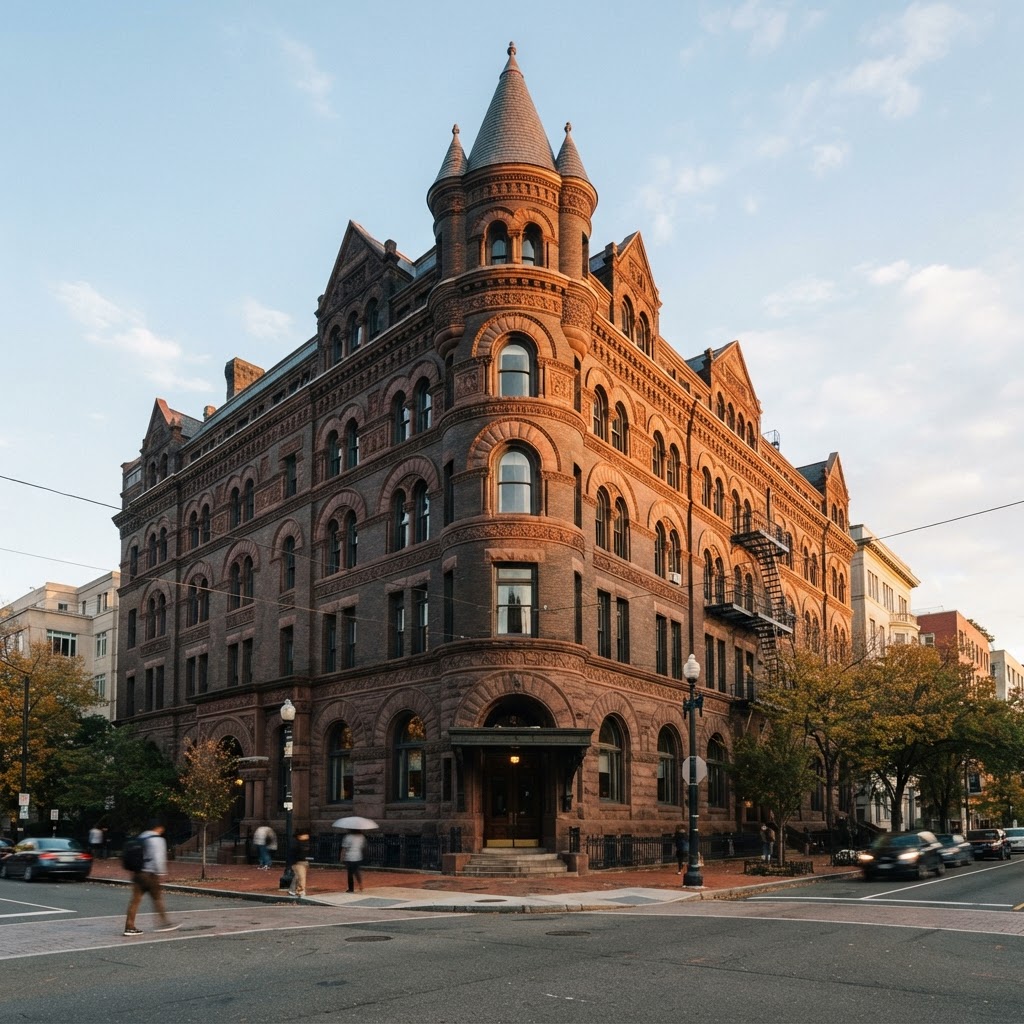
By the early 20th century, Shaw and the adjoining U Street corridor together formed what's often called the pre-Harlem national center of Black intellectual and cultural life in America — see our U Street Corridor guide for the deeper dive into that side of the story. Shaw's own signature landmark from this era is the True Reformer Building at 12th and U, completed in 1903 and designed by John Anderson Lankford, the first registered Black architect in Washington DC. It wasn't just architecturally significant — it housed a Black-owned fraternal and financial organization that helped Black Washingtonians start businesses and access services at a time when white-owned banks and insurers routinely refused them. The building still stands today.
A few blocks over, the Howard Theatre opened in 1910 at 620 T Street NW as one of the first major theaters in the country built for Black audiences and performers, years before Harlem's Apollo. Its stage hosted Duke Ellington, Ella Fitzgerald, Pearl Bailey, Sarah Vaughan, Dinah Washington, Sammy Davis Jr., James Brown, Otis Redding, Lena Horne, and — decades later — Chuck Brown and the Soul Searchers, go-go's founding band. See our Go-Go Music guide and Chocolate City guide for how those threads connect to the rest of Black DC's story.
1968, and the Long Rebuild
Like U Street, Shaw was devastated by the riots that followed Dr. Martin Luther King Jr.'s assassination in April 1968. Commercial blocks that had thrived for sixty years sat burned out and disinvested for most of the next two decades, and the Howard Theatre went dark.
The turnaround tracks almost exactly with U Street's: the Green Line's Shaw-Howard University Metro station opened in 1991, giving the neighborhood a reason for foot traffic again, and the Walter E. Washington Convention Center broke ground in 1997 a few blocks south, pulling in new investment along 7th and 9th Streets. The Howard Theatre itself didn't reopen until a full restoration wrapped in 2010 — a much longer dark stretch than the Lincoln Theatre's on U Street.
Blagden Alley and What's Actually Here Now
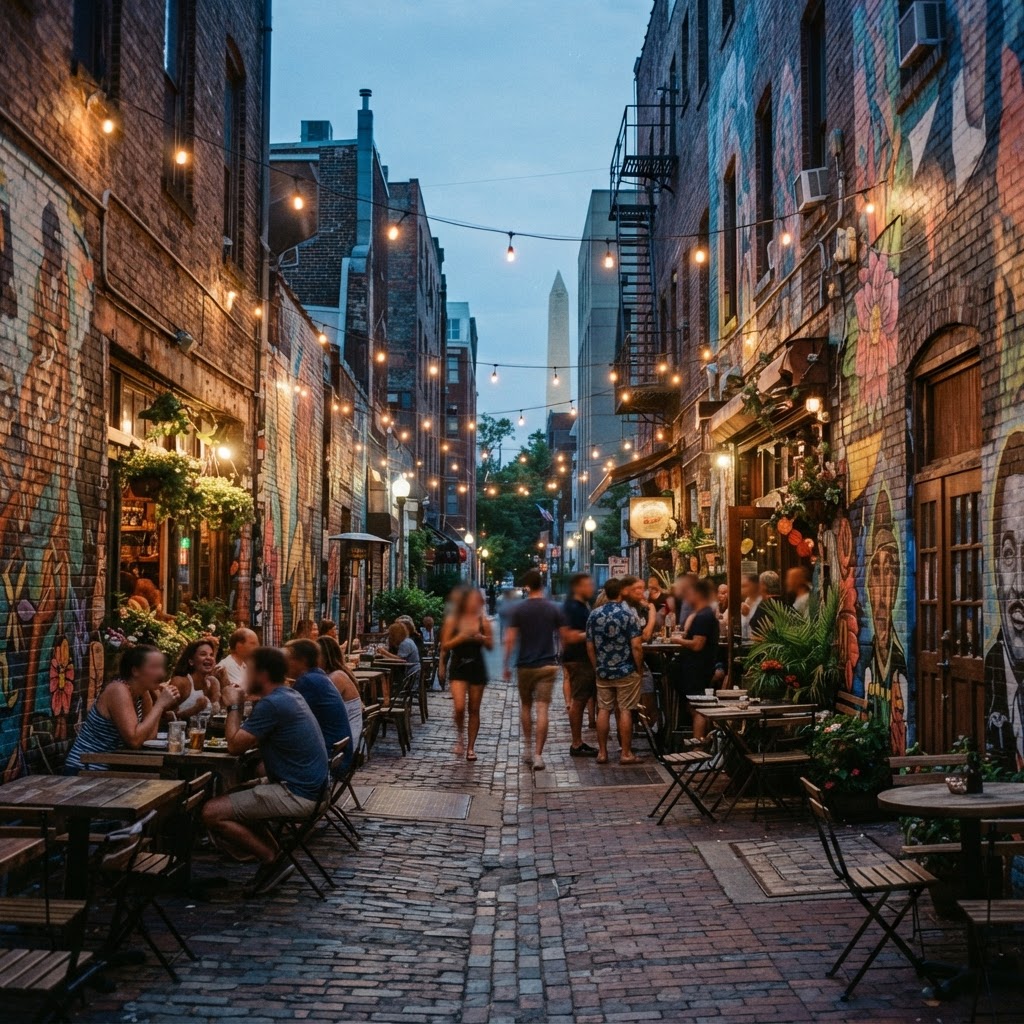
The neighborhood's best current find is Blagden Alley, a former horse-stable alley behind 9th and N Streets NW that's now a compact pocket of murals, small restaurants, and bars tucked out of sight from the main streets. The Dabney, tucked into the alley, has held a Michelin star every year since the guide arrived in DC in 2017 — reservations go fast. Tiger Fork brings a livelier, Hong Kong-inspired menu to the same stretch, and La Colombe runs a coffee counter in the alley if you're just passing through.
The Howard Theatre still runs a regular calendar of music, comedy, and community events, and it's worth checking regardless of who's booked. Beyond the alley, Shaw's main commercial spine along 7th, 9th, and Florida Avenue is a mix of newer condo-ground-floor restaurants and older institutions that never left — a genuinely different texture than the more nightlife-heavy stretch of nearby U Street.
Where It Is and How to Get There
Shaw's boundaries shift depending on who's drawing them, but the commonly used version runs roughly from Florida Avenue and LeDroit Park/Howard University on the north, down to Massachusetts Avenue and Mount Vernon Square/the Convention Center on the south, over to Truxton Circle on the east, and up against the U Street and Logan Circle neighborhoods on the west.
The Shaw-Howard University Metro station (Green/Yellow lines) sits right at the neighborhood's north end near the Howard Theatre and True Reformer Building; the U Street station is a short walk further north if you're combining a visit with U Street. Both put you within a 10-minute walk of Blagden Alley. See our Neighborhoods overview for how Shaw compares to DC's other home-base options.
Compare Hotel Prices Near Shaw
Shaw sits between the Convention Center and U Street — see current rates before you book.
See Shaw and U Street's History With a Guide
A guided walk covering both neighborhoods is a good way to hear the history connect in person.

African American History Tour with Museum of African American History Ticket
KB Tours is a one of a kind African American Heritage tour operator in Washington DC that takes visitors to explore the historic African American neighborhoods in all four quadrants of the city, often going off the beaten path. With knowledgeable guides who are passionate about sharing interesting facts and captivating stories of Washington DC's black history, KB Tours prides itself on providing an engaging and entertaining tour experience. Visitors will have the opportunity to stop and visit iconic landmarks and monuments in the city, including the Lincoln Memorial, the Martin Luther King Jr. Memorial, the Capitol, the White House exterior, and tour the Frederick Douglass when opened. KB Tours' guides are committed to keeping visitors of all ages engaged throughout the tour, encouraging young children to participate in the tour activities. The tour includes a ticket the Museum of African American History and Culture. You must take the tour to join us for entrance to museum.
Historical details are drawn from DC's Office of Planning's Shaw Historic District documentation, the DC Preservation League's Shaw materials, Shaw Main Streets' neighborhood history, and Washington.org's Shaw neighborhood guide.
Frequently Asked Questions
Keep Exploring
U Street Corridor: DC's Black Broadway
The adjoining corridor Shaw's history is most tightly bound up with.
Chocolate City: DC's Black History & Culture Guide
The wider story Shaw and U Street both fit into.
Go-Go Music: DC's Official Sound
Chuck Brown and the Soul Searchers played the Howard Theatre.
Neighborhoods & Where to Stay
How Shaw compares to DC's other home-base options.
Best Restaurants in DC
Includes more on Shaw and Blagden Alley's dining scene.