DC in Winter: A Local Guide to the Cold, Quiet Season
Winter is DC's honest off-season: less spectacle, more space, and weather that punishes sloppy routing. You probably will not get postcard snow. You can get quiet galleries, easier tables, low winter light on the monuments, and a trip that costs less energy—if you stop crossing the Mall for every single stop.
The cold is manageable. The wind and bad routing are what wreck people. Group your day into one compact outdoor window and one building cluster, use every indoor restroom before you leave it, and do not make a January evening tour prove how tough you are.
The Honest Version of a DC Winter
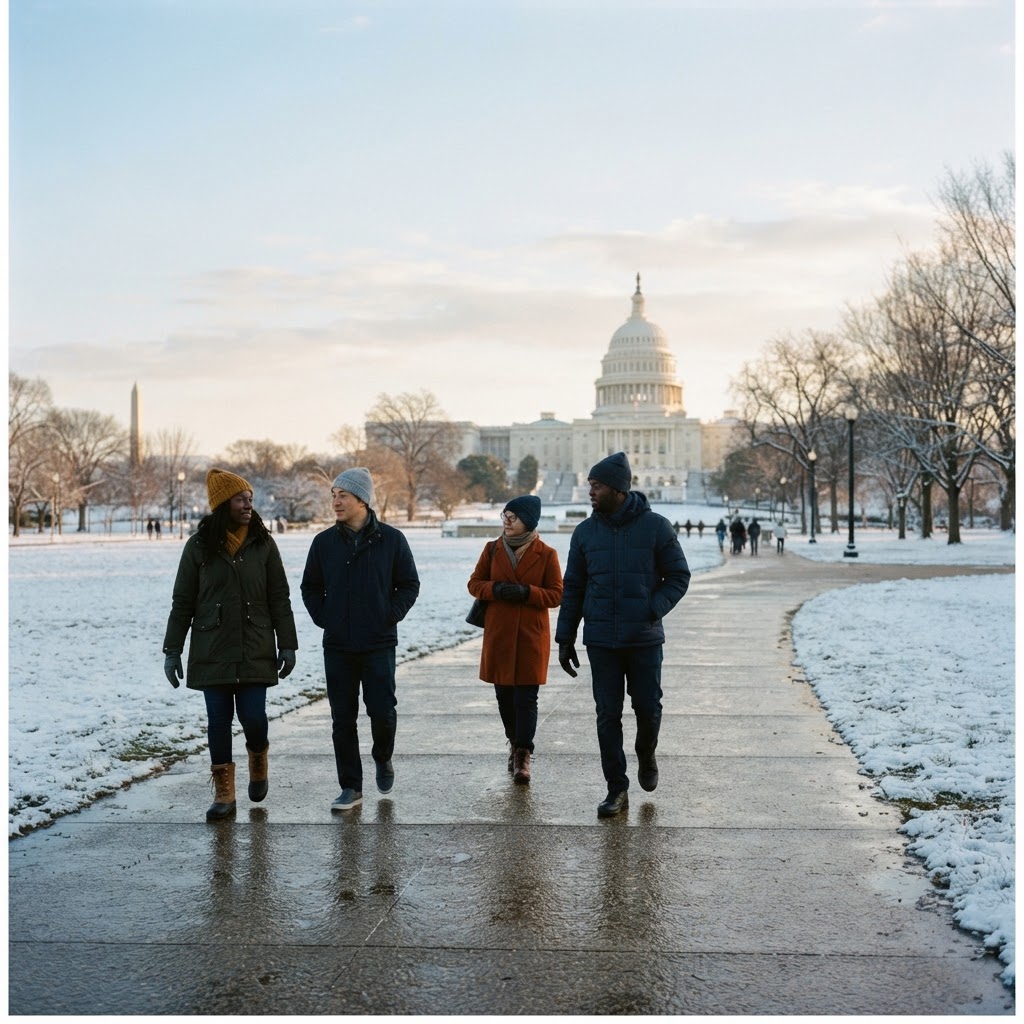
DC winter is usually cold pavement, bare trees, sharp wind, and a sky that cannot decide what shade of grey it wants to be. It is not a reliable snow-globe trip. Snow can arrive, sometimes seriously, but whole stretches of winter pass with little more than cold rain and a few flurries. Book for quieter museums and lower seasonal demand, not for guaranteed white monuments.
The National Weather Service keeps the region's official temperature, precipitation, and snowfall records on its Washington climate page. Check the seven-day forecast again when you pack. The exposed Mall can feel much colder than a downtown block, and the wind between the Washington Monument and Lincoln Memorial is the part visitors underestimate.
Winter also gives you a version of the city spring visitors rarely see: museum galleries with room to stop, easier restaurant reservations, clean sightlines through the leafless trees, and monuments that look better in low afternoon light than they do at noon in July. The trade is simple—you need a tighter route and better clothes.
December and January–February Are Different Trips
December is the festive version: lights, markets, decorated hotel lobbies, office parties, and more weekend families downtown. Put current event dates on your calendar from the official organizer, then use our Holidays in DC guide for the National Christmas Tree, seasonal market, and ZooLights strategy. Do not assume every event runs nightly or through the entire month.
January and February are the quieter version. That is when the off-season bargain is real, but so are abbreviated daylight, occasional weather disruptions, and holiday closures. The National Gallery is closed December 25 and January 1; other museums set their own calendars. A federal holiday does not automatically mean every attraction is closed, and a normal weekday does not guarantee every gallery is open. Check each institution, not a generic holiday-hours list.
For a first visit, choose a weekday-heavy itinerary. You get more reliable access to the Capitol complex and Library of Congress, while weekends are better saved for museums and neighborhoods. If a major convention, inauguration-related event, or federal security operation overlaps your dates, hotel rates and street access can stop behaving like winter off-season overnight.
Day 1: Capitol Hill With a Tropical Reset
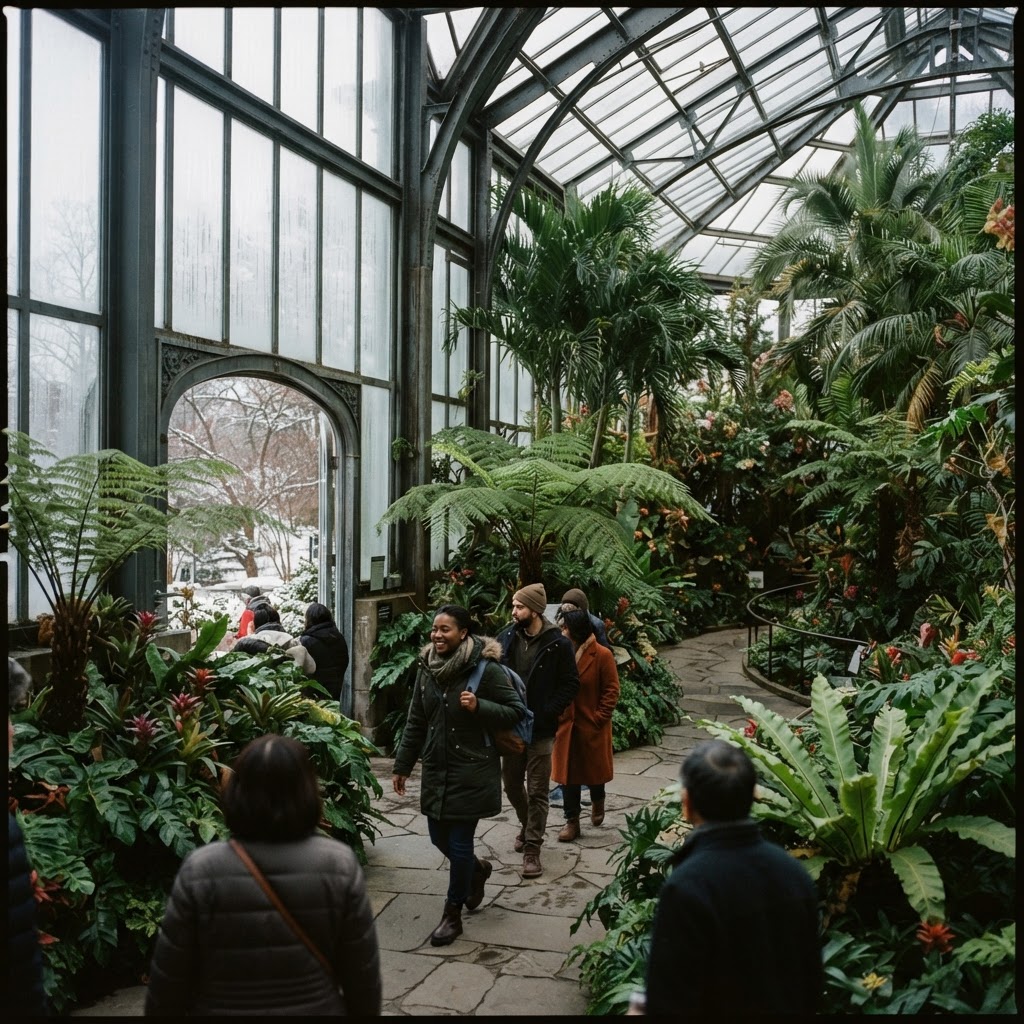
Start with a reserved Capitol tour or the Library of Congress Thomas Jefferson Building, then cross to the free United States Botanic Garden Conservatory. The Conservatory is typically open 10 a.m. to 5 p.m. daily except December 25, and the Tropics house is the best twenty-minute temperature reset in the city. It also has accessible restrooms and bottle filling inside—use them before heading back outdoors.
The route works because the stops are close by DC standards: Capitol Visitor Center, Library of Congress, Supreme Court exterior, and Botanic Garden all sit within the same compact zone. Federal Center SW and Capitol South are the useful Metro stations. Our Capitol Hill guide covers the buildings and Eastern Market without sending you back and forth across the neighborhood.
Eat indoors near Eastern Market or Pennsylvania Avenue SE, then decide whether the temperature earns another outdoor loop. Winter is not the season for a heroic march just because a map says two places are only a mile apart. A mile of exposed sidewalk after sunset feels different from a mile between galleries.
Day 2: National Gallery First, Penn Quarter After Dark
Open at the free National Gallery of Art, normally 10 a.m. to 5 p.m. daily. Its West and East Buildings connect underground, so you get two collections, the Multiverse light tunnel, food, and restrooms without putting your coat back on. This is the winter anchor, not a backup plan.
After 4 p.m., move to the National Portrait Gallery and Smithsonian American Art Museum in Penn Quarter. They share one building, are free, and normally stay open until 7 p.m.—two hours later than most Mall museums. The enclosed Kogod Courtyard gives you seats under glass, and Gallery Place–Chinatown Metro is about a block away. More detail is in our National Portrait Gallery guide.
That later closing solves the short-day problem. Instead of trying to squeeze another Mall museum in at 4:20, use Penn Quarter for late galleries, dinner, and a direct Metro ride back. Winter planning gets better the moment you stop pretending darkness means the day is over or that every museum closes at the same time.
Do the Monuments at Midday, Not as an Endurance Test
Outdoor areas of National Mall and Memorial Parks are generally open 24 hours, but that does not mean the indoor spaces, elevators, restrooms, concessions, or ranger desks run 24 hours—or that weather cannot close something. Check the current National Mall conditions before leaving the hotel.
In winter, put the Lincoln, Vietnam Veterans, Korean War Veterans, and World War II memorials into the brightest two or three hours of the day. Start near Lincoln and work east with the wind forecast in mind. Use a museum restroom before the loop; public facilities around the Mall are less frequent than the map makes the area look, and weather or maintenance can take one out of service.
Fresh snow is beautiful, but cleared pavement, black ice, slush at curb ramps, and road salt are the actual walking conditions. Stay on treated paths, do not climb snow-covered steps for a photograph, and skip rental bikes and scooters when surfaces are icy. The Getting Around DC guide includes current restroom, construction, Metro, bike, and scooter advice.
What to Do When Snow Is Actually Falling
Open three official pages before you improvise: snow.dc.gov for District emergencies and closures, WMATA severe-weather guidance for rail and bus changes, and the National Mall conditions page for federal park access. Metro can run normally in light to moderate snow, but bus routes may change and extreme weather can reduce or suspend service.
If DC declares a snow emergency, parking is banned on marked snow-emergency routes so plows can clear curb to curb. That is not visitor trivia if you brought a car—vehicles can be ticketed and towed. Leave the car parked legally and use rail if service is operating.
Your storm-day route should shrink, not merely move indoors. Choose one Metro-adjacent building with enough content for four hours: National Gallery, Portrait Gallery/American Art, Spy Museum, or a timed-entry Smithsonian. Sidewalks are cleared property by property, so one block can be dry and the next can be ice. A three-museum scavenger hunt is how a manageable snow day becomes miserable.
Pack for Wind and Wet Pavement, Not a Ski Trip
The useful uniform is a wind-resistant coat, thin layers you can remove at museum security, gloves that still let you use a phone, a hat, warm socks, and water-resistant walking shoes with real tread. A giant puffer and heavy snow boots are overkill for many forecast periods; a fashionable wool coat with bare ankles is underkill almost every time.
Keep the bag small. You will be opening it at security, carrying it through warm galleries, and stuffing gloves into it every hour. Bring lip balm and a compact battery pack—the cold, navigation, photos, and constant Metro checks make a tired phone more likely than people expect. Our What to Pack for DC guide covers the year-round museum bag and walking-shoe rules.
A Winter Evening Is Either Excellent or a Bad Idea
On a dry 42-degree evening, the monuments after dark can be the highlight of the trip: fewer people, clean reflections, and no summer humidity. On a windy 27-degree evening, an open-air loop is punishment with uplighting. Read the hourly temperature, wind, and precipitation—not just the daily high—before committing.
If the weather is reasonable, a guided vehicle-based monuments tour gives you heated travel between outdoor stops. Read the product details closely: 'night tour' does not guarantee an enclosed bus, and some electric-cart products are partly open to the air. If the weather is ugly, use a performance, late museum, or long dinner instead. Winter rewards flexible evenings more than ambitious ones.
Three Things That Earn Their Space
Pack for wind, wet pavement, and security lines—not an imaginary week at a ski lodge. These are the pieces that keep a cold DC day moving.
Wind-resistant winter coat
The Mall is exposed. A shell that blocks wind matters more here than a coat that only looks warm.
Shop on AmazonWater-resistant walking shoes
Real tread for wet stone, salted sidewalks, and the slush that collects at every curb ramp.
Shop on AmazonTouchscreen gloves and warm hat
Warm enough for a monument loop, thin enough to use Metro and your phone without a constant strip-and-redress routine.
Shop on AmazonLet the Vehicle Cover the Exposed Miles
A Capitol, architecture, museum, or vehicle-based monuments tour can replace miles of winter pavement. Read the exact vehicle and stop details before booking—open carts and long outdoor stops still feel like winter.
Weather, snow-response, transit, park-access, and attraction details were checked against the National Weather Service, District Snow Team, WMATA, National Park Service, National Gallery of Art, National Portrait Gallery, and United States Botanic Garden in July 2026. Winter operations change with each storm; recheck the linked official page for your exact date.
Frequently Asked Questions
Keep Exploring
Holidays in DC
The seasonal lights, markets, and event planning that belong specifically to December.
DC on a Rainy Day
The indoor strategy when winter arrives as cold rain instead of snow.
What to Pack for DC
Shoes, layers, museum bags, and the gear that earns its place.
Getting Around DC
Metro, buses, construction, restrooms, bikes, scooters, and airport transfers.
Best Time to Visit DC
How winter compares with spring crowds, summer heat, and fall weather.