DC for College Students: A Budget 2-Day Itinerary
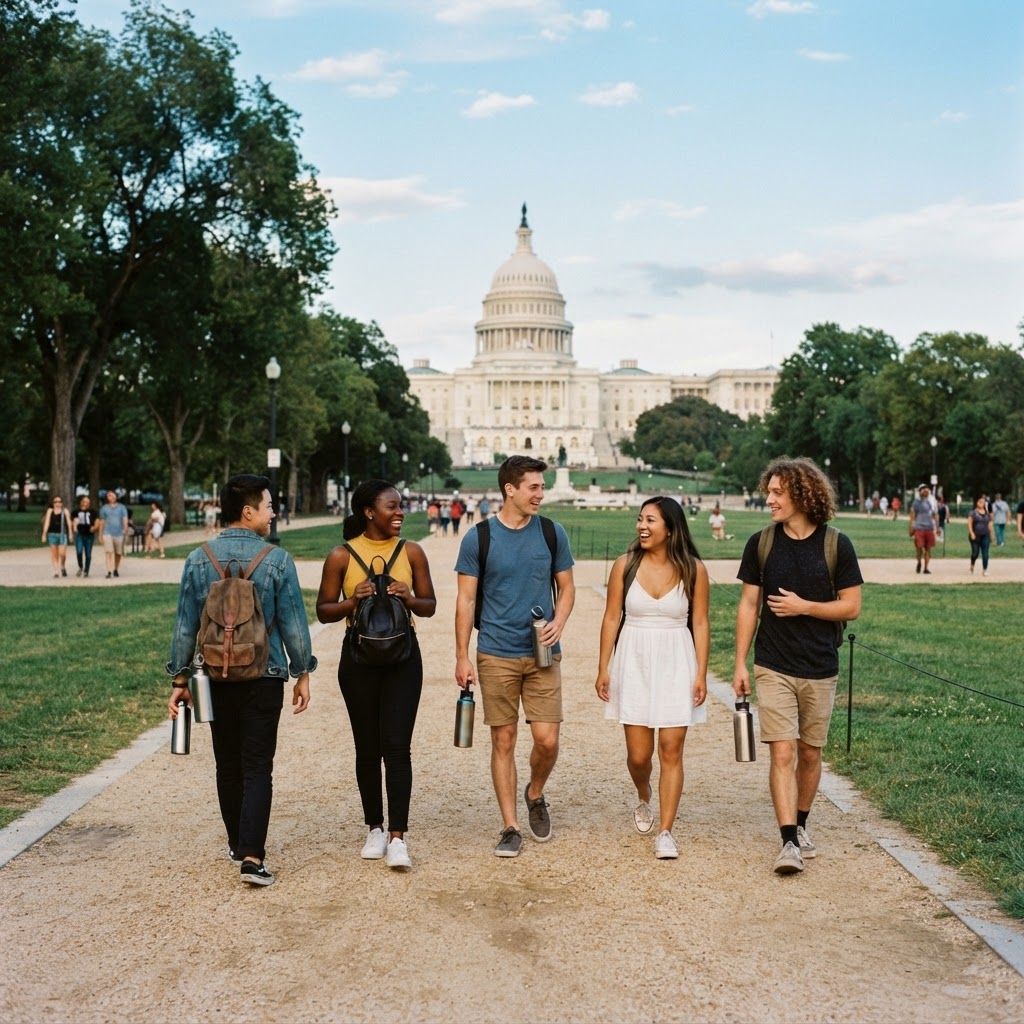
DC is one of the rare cities where the student-budget version of the trip is not the watered-down version. The museums are free, the outdoor memorials are accessible day and night, and the best stories are sitting in neighborhoods your school group probably skipped.
Do not spend the whole weekend touring campuses or the whole night trying to get an under-21 friend past a door. Pick one or two schools, use the free federal core properly, and plan one evening everybody can actually enter.
First, Decide Which College Trip This Is
A friends' weekend and a prospective-student visit are not the same trip. If you are touring schools, reserve the official campus sessions first and build the sightseeing around them. If you are already in college and visiting with friends, skip the four-campus scavenger hunt. Pick one neighborhood, one museum block, and one night plan instead of spending the weekend comparing student centers you may never attend.
Two days is enough for the good version: the federal core on day one, then one or two campuses plus a neighborhood on day two. DC looks compact on a map, but Georgetown, Howard, GW, and American sit in different directions. Trying to collect all four in one day turns the city into a bus-transfer exercise.
Day 1: Do the Expensive-Looking Part for Almost Nothing
Start at the Library of Congress on Capitol Hill. The Thomas Jefferson Building is free, but it requires a timed-entry ticket; the Library releases advance tickets and a limited same-day batch online. Then walk west into the Smithsonian stretch. Smithsonian admission is free across its DC museums, but the official museum list flags the places that still require free passes, including the African American History and Culture Museum and Air and Space.
Choose one museum, not five. American History is the easiest all-group compromise; the National Gallery of Art is free with no ticket if your group would rather split up and meet in the Sculpture Garden. Save the Free Things to Do guide for backup ideas. A zero-dollar day is not a consolation prize here — it is the main event.
The Mall Survival Notes Nobody Puts on the Group Chat
Use the restroom before leaving a museum. Outdoors, the National Park Service lists public facilities at the Lincoln, Jefferson, King, FDR, and World War II memorial areas, Constitution Gardens, and Washington Monument Lodge. The Lodge sits east of the monument along 15th Street between Madison and Jefferson drives. Screenshot those anchors; when somebody says they can wait, they usually cannot wait another mile.
Construction, demonstrations, races, and major events can reroute a familiar walk with little warning. Check the current NPS maps and notices that morning, then keep the route flexible. Do not climb a fence because an old TikTok showed an open path. DC is good at temporary security perimeters and bad at making yesterday's shortcut useful today.
Day 1 Night: Plan for the Whole Group, Not Just the 21-Year-Olds
DC's legal drinking age is 21, and many nightlife venues become age-restricted at the door even when the neighborhood itself is busy. If your group mixes ages, do not build the night around a bar and hope the person checking IDs feels generous. Check the venue's current age policy before buying tickets.
A game, museum evening, comedy show, concert, ghost walk, or monument night tour works better for a mixed-age group. Start with the Live Events guide and DC Sports guide, then verify the specific event's rules. For a neighborhood night, U Street gives you DC history, Ethiopian food, half-smokes, and music in the same corridor; Adams Morgan is the louder late-night option, with plenty to eat even if bars are not part of the plan.
Day 2: Tour the Campus You Might Actually Attend
Howard is the best campus stop if history and a real central quad matter to you. Its admissions office says the campus is open and provides self-guided resources when a registered tour is not available. GW is the opposite experience: an urban campus folded directly into Foggy Bottom, useful if you want to see what daily life beside federal offices and Metro actually feels like. GW offers registered tours and a self-guided booklet when dates are full.
Georgetown gives you the classic hilltop campus, but there is no Metrorail station in Georgetown, so budget extra time for a bus or the walk from Foggy Bottom. American is the traditional green-campus choice; its official visitor page describes a main quad, gardens, and self-guided options. Pick at most two and register through each school's admissions site. Walking around the lawn tells you less than hearing a current student explain housing, transit, and what closes on weekends.
Metro, Bikes, and Scooters Without Burning the Budget
Use Metro for the long jumps and walk within each neighborhood. WMATA accepts SmarTrip on a phone or plastic card, and current rail fares vary by distance and time, so use its Trip Planner instead of loading a random amount. Do not assume your college ID creates a general visitor discount; WMATA's student programs are specific programs, not a universal college-student fare.
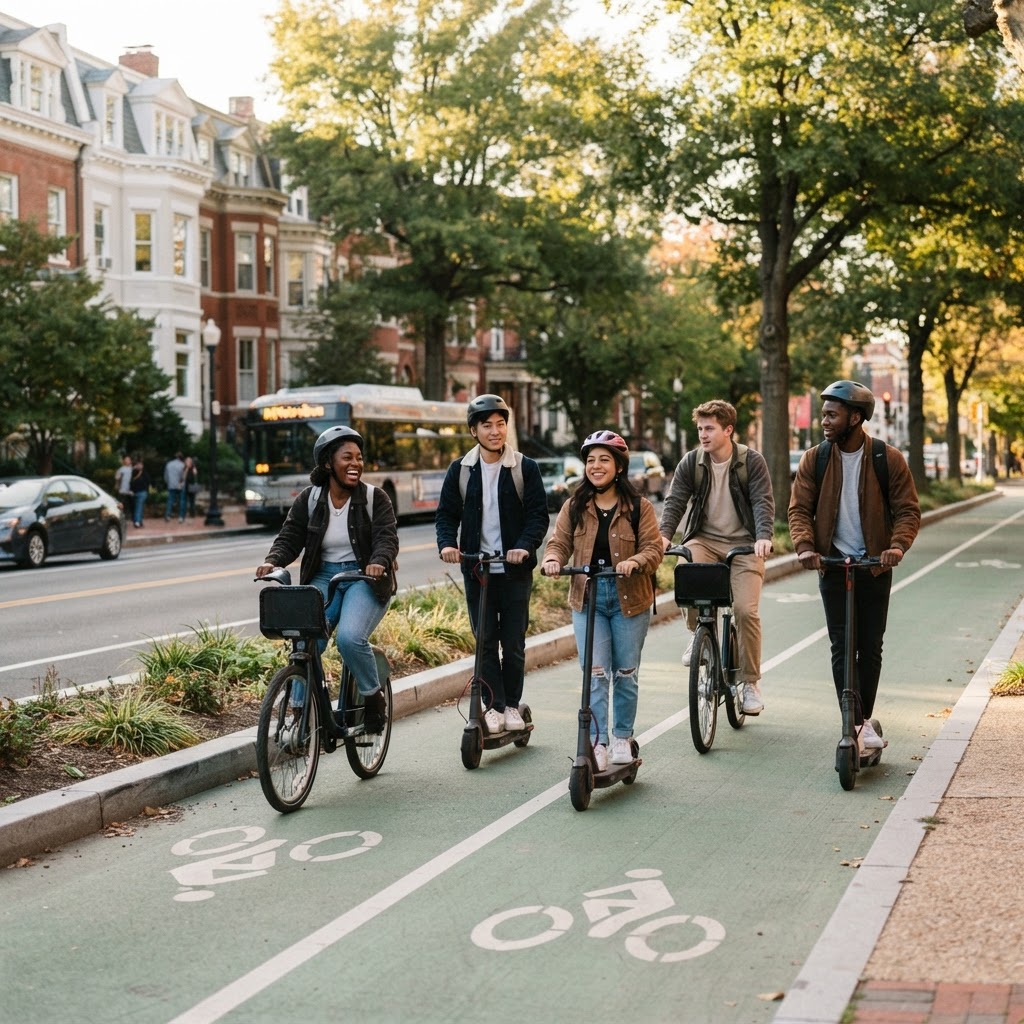
Capital Bikeshare, shared e-bikes, and rental scooters can save the dead stretch between attractions, but use a protected lane when you can. DDOT says bikes may use sidewalks outside the Central Business District but must yield to pedestrians; bikes and personal mobility devices generally cannot use downtown sidewalks. Shared dockless bikes and scooters must be locked to a rack, corral, or approved fixed object without blocking the sidewalk. Helmets are the smart move even when your age does not make one mandatory.
Where to Stay and Eat When Everyone Is Splitting the Bill
Penn Quarter is the easiest base for a first trip, but it can price like a convention district. Dupont Circle gives you useful Metro access and more life after office hours. Shaw and U Street put cheaper casual food and nightlife closer to the room, while still keeping the Mall one train ride away. Compare the total after taxes and fees, not the seductive first number in a booking grid.
For food, build around one proper DC meal and keep the rest casual. Split an Ethiopian platter on U Street, get a half-smoke, use a food hall, or carry lunch to a park. The Best Restaurants guide includes affordable icons as well as splurges. The real budget killer is not dinner — it is four separate rideshares because nobody checked the Metro route before leaving the hotel.
Tours Worth Splitting With Friends
A night, ghost, bike, food, or walking tour gives the group one fixed plan without consuming the whole budget. Check the operator's minimum age and current meeting point before booking.

DC Monuments Night Tour with 10+ Stops, National Mall, Tickets
Experience Washington DC lit up at night during this 3-Hour Guided Night Tour of the National Mall and Monuments. Make your way through the city at night via temperature-controlled coach bus, learning about sites you pass along the way. Travelers will have a chance to stop at 10 top sites for photos including the White House, US Capitol, MLK Jr Memorial, WWII Memorial, Vietnam War Memorial, & more. Enjoy the views as your route passes by 20+ additional sites such as Washington Monument, Arlington Cemetery, and many of the Smithsonians. Tour Stops: • National Archives • The U.S. Capitol • White House • Lincoln Memorial • WWII Memorial • MLK Memorial • Korean War Memorial • Lincoln Memorial • Vietnam Memorial • Vietnam Women Memorial • USMC Memorial Cherry blossom season (typically late March-early April) also walk along and see cherry blossom trees up close. Travelers may upgrade to include Tickets to the Washington Monument, Air & Space Museum, or African American Museum.

Ghosts of Georgetown & The Exorcist Steps Walking Tour
Deep, dark secrets about a forgotten past lie among the manicured gardens and Victorian row houses of DC’s finest neighborhood. Historical figures stayed here, documenting their experiences in letters & journals. Some have never left, haunting these grand homes to this day. On this family-friendly nighttime tour, you will learn about this town and be enchanted by its past, present, and future. Halloween vibes all year long. -Hear stories of a young boy trapped after his accidental death in the oldest residence in DC. -Learn what happened in Civil War hospitals that make an apartment seem unliveable. -Learn about the curse of Abraham Lincoln's son. -Hear a story of a nanny's undying love for her charges - and her rules. -See lights flicker at a house whose past resident hated electricity and whose ghost haunts our guides. -End the tour at the famous Exorcist Steps and hear how this movie was based on a true local story. Do you dare to walk down the creepy stairs at night?

Washington DC Monuments and Memorials Night Tour
See Washington, DC in ways large bus tours can’t—especially after dark. This small‑group night tour (12 guests max) offers engaging stories, more time at each site, and a relaxed pace. As the city lights rise, the monuments take on a striking presence: marble glowing softly, reflections on the Tidal Basin, and a peaceful National Mall. You’ll receive access to a bonus audio experience that adds rich historical context to every stop, complementing insights from your local expert guide. Visit landmarks such as the Lincoln Memorial, U.S. Capitol, and Vietnam Veterans Memorial, exploring the stories and moments that shaped the nation. With 10–20 minutes at each stop, you’ll have time to walk around, take photos, and enjoy the illuminated monuments without feeling rushed.
Frequently Asked Questions
Keep Exploring
Free Things to Do in DC
Fill the weekend without turning every stop into a ticket purchase.
Getting Around DC
Metro, buses, bikeshare, scooters, and when a rideshare is worth it.
Neighborhoods & Where to Stay
Compare Penn Quarter, Dupont, Shaw, U Street, and other useful bases.
Live Events in DC
Find a game, concert, museum program, or show for your dates.
Build Your Own Itinerary
Turn your campus visits and interests into a day-by-day plan.