National Museum of the American Indian: A Local's Guide
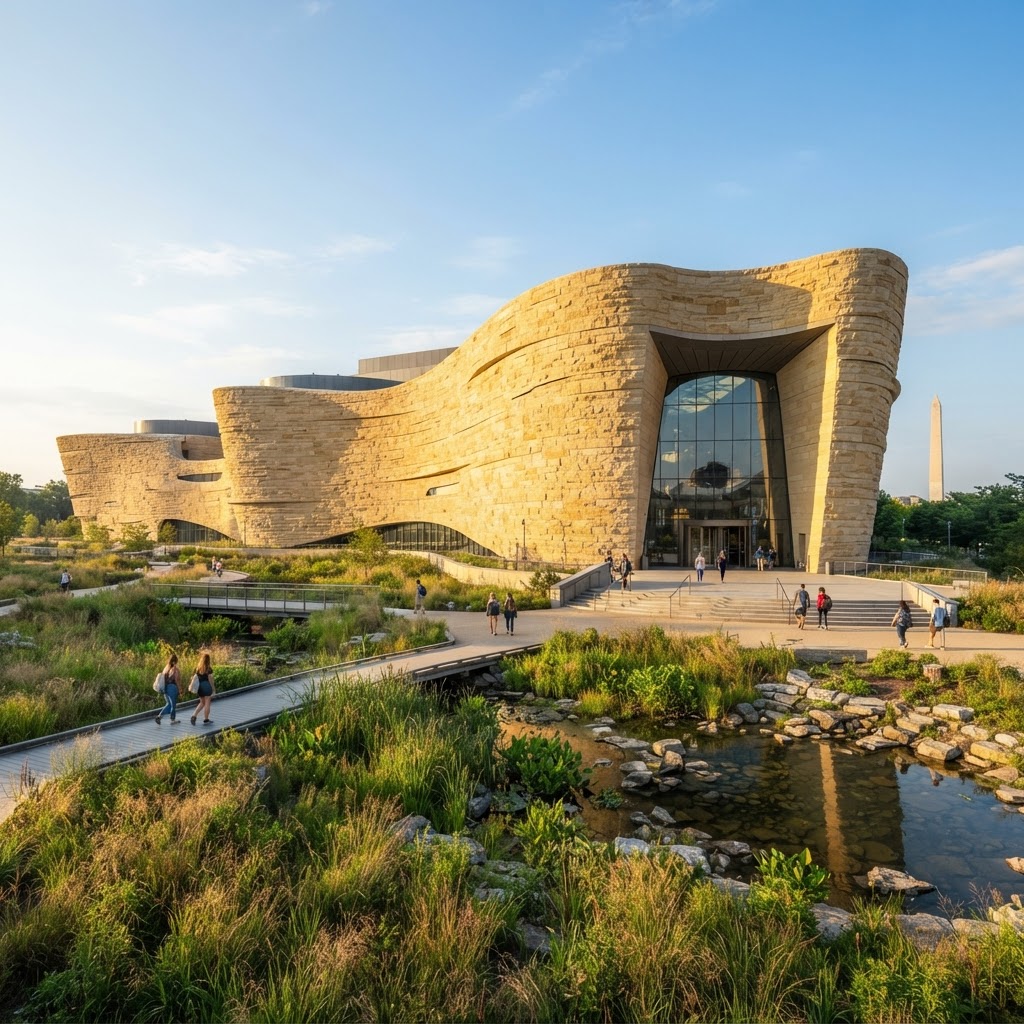
The limestone curves pull people in, but the real mistake is treating this as a quick artifact stop between Air and Space and the Capitol. NMAI makes a stronger case: Native nations are contemporary political and cultural communities, not a chapter that ended before Washington was built.
Give the museum two to three hours, include the landscape, and eat at Mitsitam if the timing works. Start with Americans or Nation to Nation, then choose an art gallery. That is a much better visit than racing floor to floor and remembering only the building.
No Pass, No Problem — Just Leave Time for Security
The National Museum of the American Indian is free, and unlike a few high-demand Smithsonian buildings, it does not require a timed pass. The museum is open daily from 10 a.m. to 5:30 p.m. except December 25. Those basics are easy; the part visitors miss is the entrance. The street address is Fourth Street and Independence Avenue SW, but the public entrance faces the Capitol at Third Street and Maryland Avenue SW.
There is still airport-style security, so carrying less gets you through faster. The museum has no public parking and the nearest Metro stations are Federal Center SW and L'Enfant Plaza. Use our Getting Around DC guide or Metro map instead of burning museum time circling the Mall for a space.
Start With Native Voices, Not a Checklist of Objects
This museum works best when you stop expecting a conventional march through artifacts arranged by century. Its exhibitions were developed with Native nations and communities, and the point is not to place Native life in the past. Begin with the short orientation film in the Lelawi Theater if it is running, then build your visit around two or three galleries instead of trying to sweep every floor.
For a first visit, make Americans one of them. The ongoing exhibition examines how Native names, imagery, and stories are embedded in US history and popular culture — sometimes so deeply that non-Native visitors barely notice them. Nation to Nation is the heavier companion: treaties, diplomacy, broken promises, and the continuing political relationship between tribal nations and the United States. It is scheduled through January 17, 2028.
The Art Galleries Deserve Real Time
Do not treat the museum as only a history stop. Stretching the Canvas: Ten Decades of Native Painting brings together more than 50 works by over 40 artists, showing how Native painters pushed past the narrow definitions the art world tried to impose on them. It is an ongoing exhibition and a strong answer to the stale idea that Native art belongs to one period or one visual style.
The current Water's Edge retrospective, on view through January 18, 2027, gathers nearly 50 works by Hoocąk artist Truman Lowe. His willow sculptures, drawings, and paintings return to water, place, memory, and the forms of canoes. Temporary exhibitions change, so check the museum's official exhibitions list before you go rather than relying on an old screenshot or travel post.
Mitsitam Is the Museum Meal Worth Planning Around
Mitsitam Native Foods Cafe is one of the few National Mall museum cafeterias that can be part of the reason you chose the building. Its food is organized around Indigenous culinary traditions from across the Western Hemisphere, which makes lunch a continuation of the visit instead of a tray of generic pizza and fries.
Go before the main lunch crush if you can, and check the museum's official visitor page the same day for current cafe service. Menus and station availability can change. If your whole schedule is built around one dish, you are setting yourself up for disappointment; the smart move is to browse what is actually open and order from there.
The Landscape Is an Exhibition Too
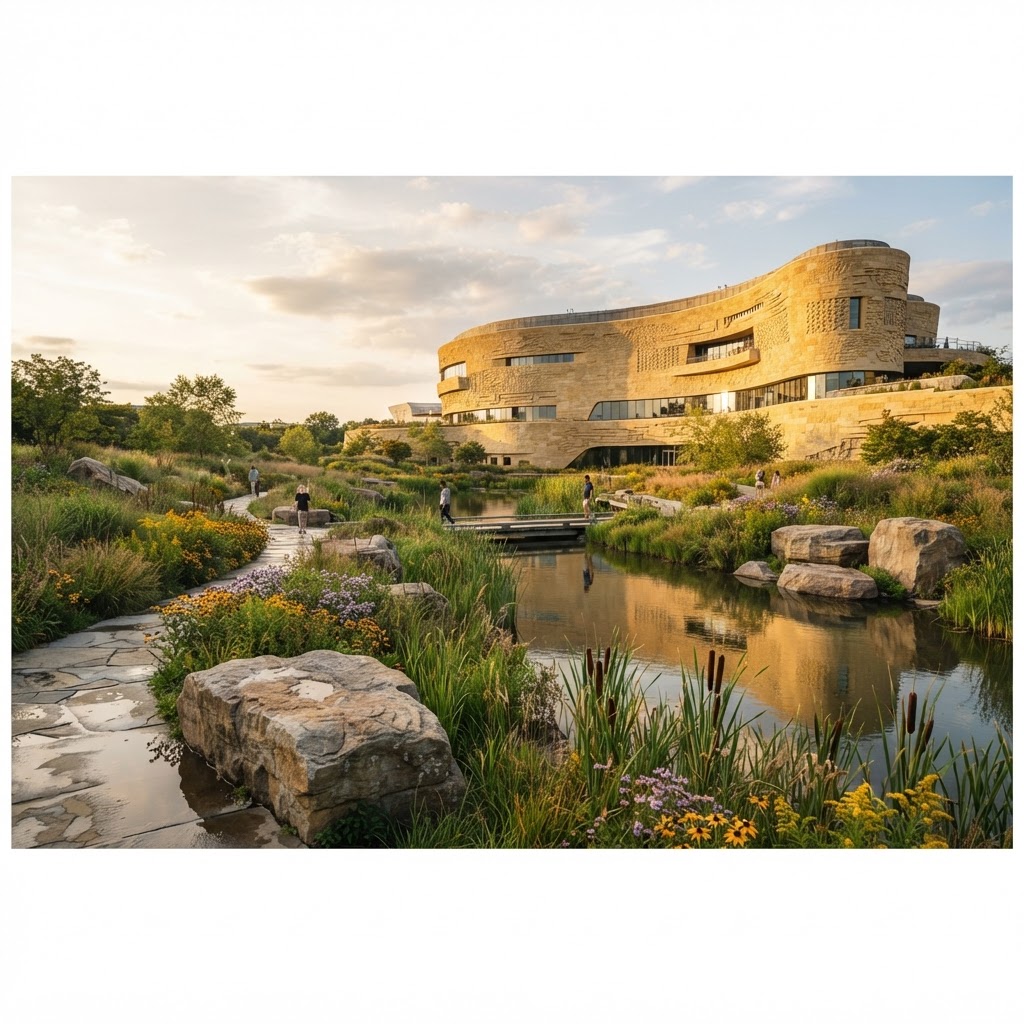
The building's curved Kasota limestone exterior is the obvious photo, but the four-and-a-quarter-acre landscape around it explains more. Smithsonian Gardens describes four habitats — upland hardwood forest, wetland, cropland, and meadow — planted with more than 33,000 plants representing about 150 species. These are not decorative beds copied from a suburban office park; the plants have food, fiber, dye, medicine, building, or ceremonial uses.
Walk the east side to the National Native American Veterans Memorial, which is outdoors and open around the clock. Then loop past the wetlands and the boulders known as Grandfather Rocks. Most Mall visitors hurry from Air and Space toward the Capitol and miss the grounds entirely. Give them fifteen quiet minutes, especially in the morning before the sidewalks heat up.
Pair It With the East End of the Mall
NMAI sits between the National Air and Space Museum and the US Botanic Garden, across the Mall from the National Gallery of Art's East Building. That makes it easy to build a good half-day without zigzagging across downtown. Museum first, Mitsitam for lunch, Botanic Garden afterward is a cleaner plan than stacking three giant Smithsonians back to back.
If this is your first DC museum day, compare the tradeoffs in our Smithsonian Museums guide. For a deeper museum visit that needs more advance planning, read the African American History Museum guide. And if the Capitol view pulls you east, our One-Day DC itinerary helps you connect the Mall without turning the day into a forced march.
Frequently Asked Questions
Keep Exploring
Smithsonian Museums Guide
Choose the right Mall museums and avoid overloading one day.
African American History Museum Guide
Pass strategy, gallery order, and realistic timing for NMAAHC.
Getting Around DC
The practical Metro and walking plan for the National Mall.
One-Day DC Itinerary
A workable first-day route that does not waste time crossing town.