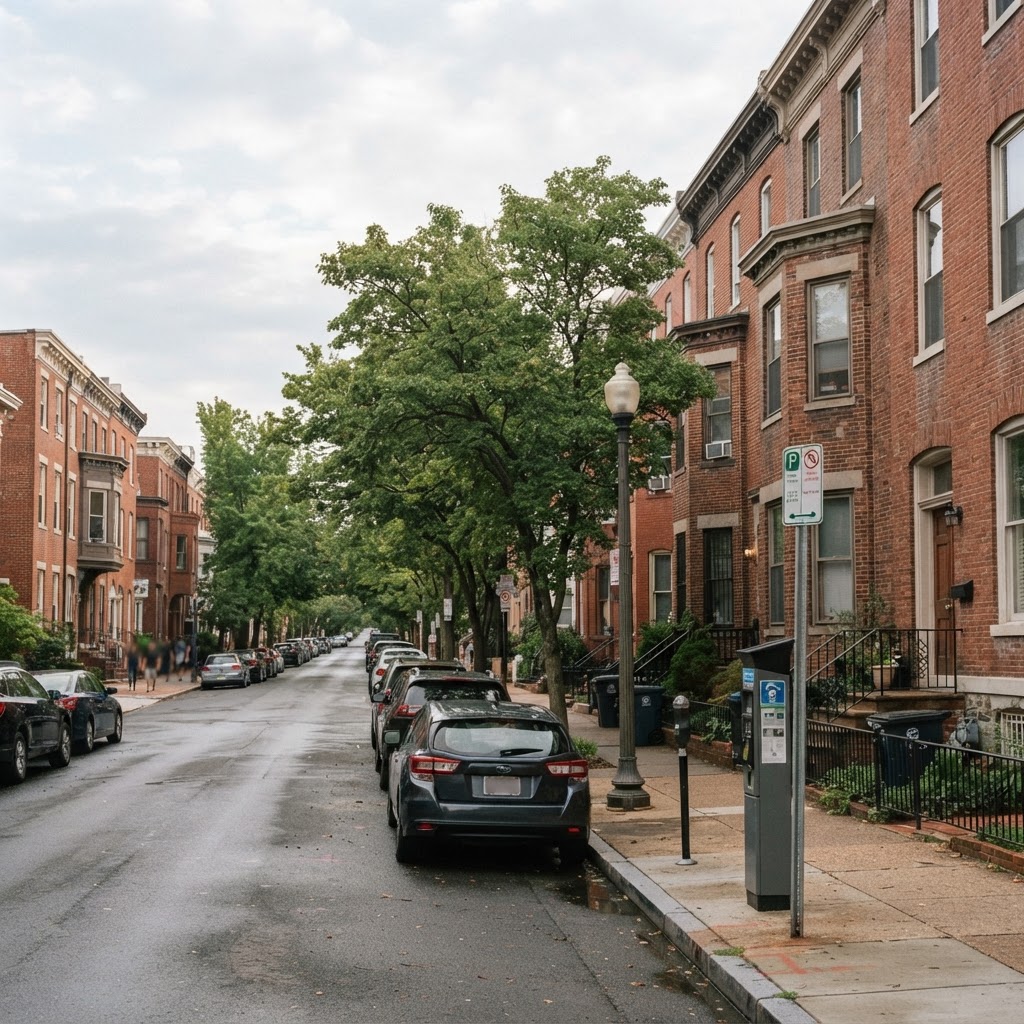
DC Parking Guide: Where to Park Without Getting Towed
Parking in DC isn't hard so much as it's unforgiving — the rules are posted, stacked three signs deep, and enforced by cameras that don't care that you're from out of town. Here's how it actually works, and where the free spaces really are.
The tourist mistake isn't paying too much for parking. It's paying for parking downtown at all. Leave the car at a Metro lot in the suburbs, ride in, and spend the difference on dinner. I've lived here long enough to have paid the tow fee once — that's the education, and you can skip it by reading the top sign on the pole.
The Honest Answer: Park Once, Then Stop Driving
Almost everything that goes wrong for visitors driving in DC comes from the same mistake — treating the car like it's useful once you're here. It isn't. The monuments, the Smithsonians, and most of the neighborhoods you came to see sit inside a few square miles with terrible parking and excellent rail service running underneath them. The winning move is to park the car somewhere it can sit legally all day, and then not think about it again until you leave.
That looks like one of three things: a hotel with a garage (expensive, but you stop caring), a Metro Park & Ride lot in the suburbs (cheap, and free on weekends and federal holidays for riders), or one of the free National Park Service lots down by the water. Circling downtown looking for a curb space is a tourist activity, not a transportation strategy.
Metro Park & Ride: The Move Most Visitors Miss
If you're driving in from out of town, don't drive into the city at all. Metro operates roughly 40 Park & Ride facilities, most of them at the end-of-line stations — Shady Grove and Greenbelt in Maryland, Vienna and Franconia-Springfield in Virginia, New Carrollton off the Beltway. You pay one flat daily fee, park all day, and ride in. Rates vary by station, and a higher non-rider fee applies if you park without actually taking a train.
Two details worth knowing. First, Metro-operated parking is free on weekends and federal holidays — which quietly makes a Saturday trip into the city one of the cheapest things you can do here. Second, at a subset of stations you can pay the parking fee with the same SmarTrip card (physical or in your phone's wallet) you used for the train and get the lower rider rate, but only if you rode at least two stops on that card and exit the lot within two hours of finishing the ride. Load enough value before you head back out.
Aim for a station on the line that serves your hotel, not just the closest one to the highway. A transfer at Metro Center with luggage is a worse start to a trip than an extra ten minutes of driving.
The Free Parking That Actually Exists
There is genuinely free, legal, all-day parking near the National Mall, and locals are quietly protective of it. Ohio Drive SW runs along the Potomac south of the Lincoln Memorial and has a limited number of free spaces. Lots A, B, and C sit just south of the Jefferson Memorial. Keep going onto the East Potomac Park peninsula toward Hains Point and you'll find several hundred more free spaces.
The catch is the walk. From Hains Point you're looking at fifteen to twenty minutes on foot before you reach anything monumental, and East Potomac Park is exposed — there's no shade, no shelter, and in July that walk is genuinely unpleasant. In April, or on a clear fall Saturday, it's one of the best deals in the city. Arrive early on weekends; these lots fill, and they fill hard whenever there's a race, a festival, or a holiday event on the Mall.
Street Meters: How DC Actually Charges You
DC's metered rates are set by demand zone, so the price per hour downtown near the White House is not the price per hour in a quieter commercial strip, and neither is posted anywhere you can memorize in advance. The rate and the enforcement hours for the block you're standing on are printed on the meter or the pay station. Read that, not a blog post.
ParkMobile is the District's official pay-by-phone service. Every metered block has a zone number posted on the meter and on nearby signs — you enter it in the app and start a session, with a small per-transaction fee added on top. Do this instead of feeding coins; you can also extend remotely without walking back, which is the whole point.
One thing the app cannot save you from: many DC meters carry a hard maximum stay, commonly two hours. When that limit runs out, it runs out. You can't buy a third hour, and the app will tell you so at the worst possible moment. If you're going into a museum for the afternoon, a meter is the wrong tool.
Residential Streets and the Two-Hour Rule
Most residential blocks in DC are zoned for Residential Permit Parking. If your car doesn't carry the RPP zone number for that area on its registration sticker, you're limited to a posted maximum — typically two hours — during the enforcement hours on the sign. This is the rule that catches visitors who think they've found a loophole a few blocks off the Mall.
Moving your car to a different space on the same block does not reset the clock. Enforcement in DC works off license plate reads, not chalk on a tire, and it is unsentimental about out-of-state plates. If you need to leave a car in a residential neighborhood for a full day, you need a garage, not a curb.
Also watch for the small stuff that generates most tickets: street sweeping windows posted on the block, fire hydrants, alley mouths, and the corner setbacks. And DC does boot cars — a vehicle becomes boot-eligible once it has two or more unresolved parking or camera tickets more than 60 days old, which matters more for a rental you'll keep for a week than most visitors expect.
Rush Hour Will Tow You, Not Ticket You
This is the single most expensive mistake available to a visitor in DC. Major commuter corridors convert curb lanes into travel lanes during rush hour — broadly speaking, mornings around 7:00 to 9:30 and afternoons around 4:00 to 6:30, though the exact window is on the sign and varies block to block. Park in one of those lanes when the restriction kicks in and your car doesn't get a ticket tucked under the wiper. It gets towed.
Recovering a towed car in DC costs you the tow fee, storage, the ticket itself, and most of an afternoon at an impound lot in far Southeast. Before you walk away from any curb space, read every sign on the pole — DC routinely stacks three or four of them, and they do not always agree in the way you'd hope.
Winter adds one more: snow emergency routes. When a snow emergency is declared, parking on those routes is prohibited so plows can clear curb to curb, and cars get ticketed and towed. The red-and-white snow emergency route signs sit higher on the pole than everything else, so look up.
Garages: When to Just Pay
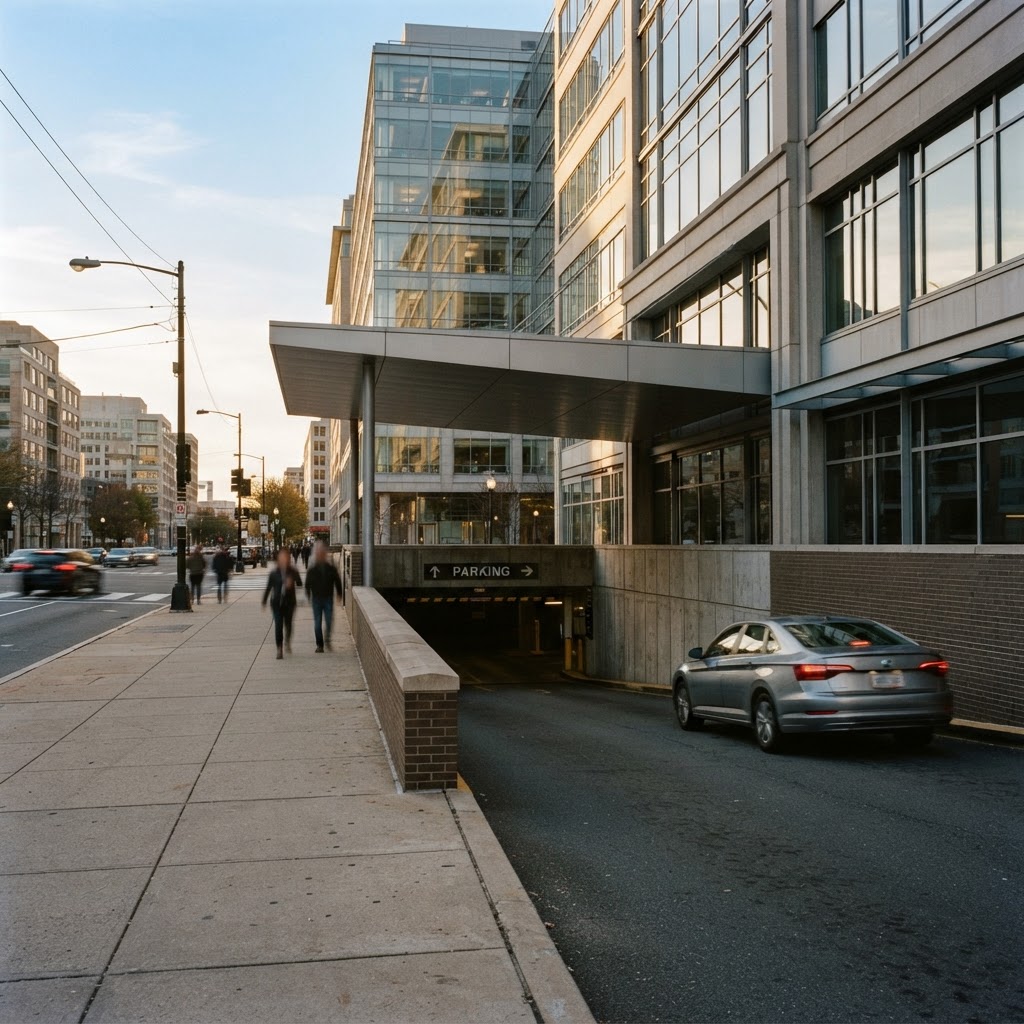
Downtown DC is full of office garages, and the pricing logic is backwards from what visitors expect. These garages exist for commuters, so weekday early-bird rates reward people who arrive before 9 a.m., and weekend rates are often dramatically lower than weekday rates because the buildings above them are empty. A Saturday in a downtown garage can cost a fraction of the same space on a Tuesday.
Book ahead through a garage-reservation app rather than pulling in off the street — the drive-up rate is nearly always the worst rate available. Near the Mall, the Smithsonian museums themselves have no visitor parking, so a garage in Penn Quarter or near L'Enfant Plaza plus a short walk is the realistic option. Union Station has a large garage that's useful if you're arriving by car and leaving by train, or if you're basing a day around the Capitol side of the city.
For big events — a Nationals game, a Commanders or Capitals night, a festival on the Mall — assume surge pricing and prebook, or skip it entirely and take the train. Event-day street parking near the venues is a fantasy.
If You're Renting a Car Anyway
The one legitimate reason to have a car in DC is day trips: Shenandoah, Mount Vernon, Great Falls, the Civil War battlefields. The efficient version is to not have a car for the city days at all — rent it the morning you leave town and return it that evening. You skip the overnight hotel parking charge entirely, which in DC frequently runs $50 or more a night on top of your room.
If you do keep a car overnight, confirm the parking arrangement with your hotel before you book rather than after you arrive. Plenty of DC hotels have no garage of their own and will point you at a nearby commercial one at full retail. That's a real line item, and it's worth knowing which side of it you're on.
Frequently Asked Questions
Keep Exploring
Getting Around DC
Metro, buses, and why you probably don't need the car once you're here.
Interactive Metro Map
Live train times and lines, so you can pick the right Park & Ride station.
Where to Stay in DC
Hotel parking runs $50+ a night — pick a neighborhood that makes it optional.
Best Day Trips from DC
The one genuinely good reason to have a car in the first place.
DCA vs. IAD vs. BWI
Which airport to fly into, and how the rental car math changes by airport.